
High-Efficiency Interlocking Profiles & Structural Components
Engineered to meet ASTM, EN, and GB specifications for deep foundations, marine bulkheads, and ground stabilization systems.
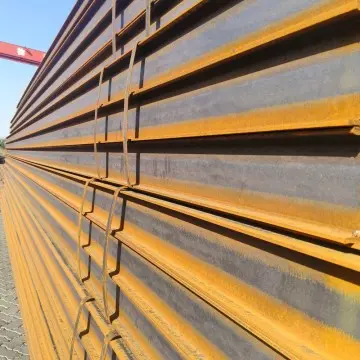
A36 / Q235 Grade Structural H-Beam Piles
Wide-flange heavy structural beams designed for combined sheet pile systems, retaining king-piles, and extreme lateral load support.
View H-Beam Solutions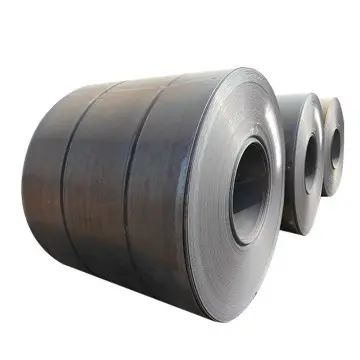
Q235B / Q345B High-Tensile Steel Coils
Structural carbon coils processed to tight tolerances, serving as raw feed for cold-formed continuous interlocking sheet pile manufacturing.
Explore Coil Specifications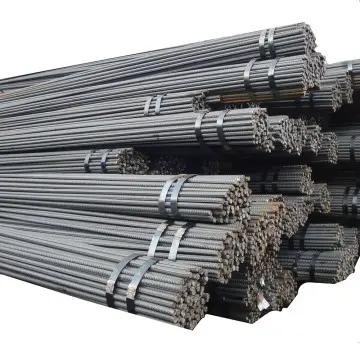
Deformed Structural Steel Tieback Rebar
High-bond rebar intended for grouted ground anchors, deadman anchors, and waling beam tiebacks in deep excavation retention.
Browse Section Details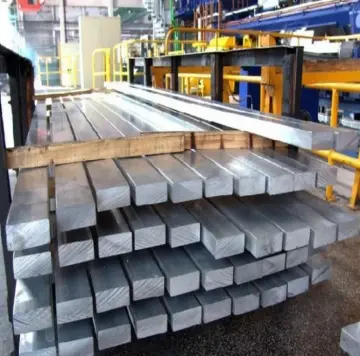
Hot-Dip Galvanized Waling Flat Steel
Heavy gauge flat bar customized for waler support plates, interlock weldment reinforcement, and corrosive shoreline bulkheads.
Review Flat Bar Options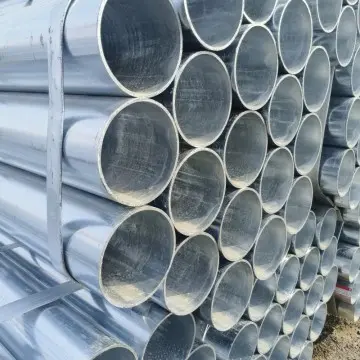
Heavy Duty Load-Bearing Welded Piling Pipes
Heavy-duty structural tubular pipe utilized with clutch interlocks to build high-modulus combi-walls for deep sea container terminals.
Access Pipe Data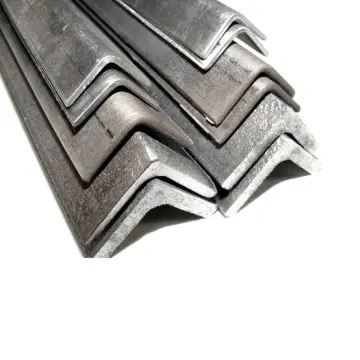
Perforated Galvanized Angle Guide Profiles
Engineered structural angles applied in pile driving guide templates to ensure tight tolerances during dynamic or vibratory installation.
Examine Angle Stock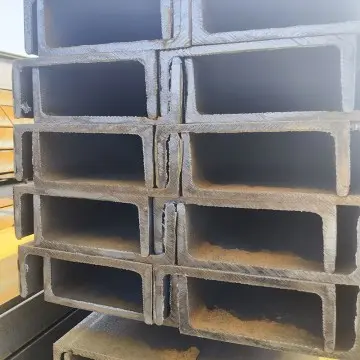
Hot Rolled Retaining Waler Channels
Heavy channel profiles deployed in back-to-back configurations to secure tie-rods across long continuous interlocking sheet pile walls.
Channel Product Portal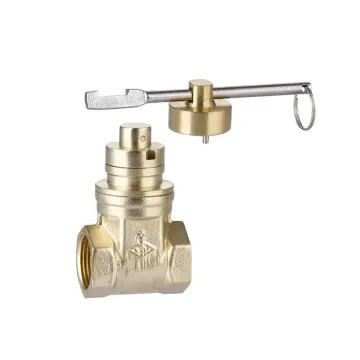
Hydraulic Dewatering Control Valves
Engineered pipeline and dewatering control valves designed for fluid cutoff and ground dewatering during deep sheet pile pit excavation.
Inspect Flow EquipmentInterlocking Steel Sheet Pile Engineering: Cross-Sectional Geometry & Soil Retention Mechanics
Interlocking sheet piles function as fundamental retaining barriers where continuous mechanical clutches link adjacent steel profiles to form rigid hydraulic and earth retention walls.
Larssen & Ball-and-Socket Clutches
The mechanical efficiency of an interlocking sheet pile wall is dictated by its clutch configuration. Traditional Larssen interlocks provide exceptional rotational elasticity (up to 5° per joint), enabling wall alignment adjustments across soft to stiff cohesive strata. In heavy combi-wall systems, cold-extruded ball-and-socket connections withstand excessive driving energy from vibratory and hydraulic impact hammers without split failures, maintaining watertight containment under hydraulic heads up to 15 meters.
Bending Resistance & Elastic Modulus
Structural selection relies on optimizing the elastic section modulus (W) and moment of inertia (I) relative to mass per square meter. Z-shaped sheet piles position the structural interlock on the outer neutral axis, maximizing effective bending resistance without shifting stresses across sliding joints. Conversely, U-shaped profiles (such as SY295 or GB/T standard geometries) offer symmetrical compact shipping properties, favored for reusable cofferdams and urban civil engineering applications.
Hydrostatic Sealing & Chemical Grouting
For high-water-table civil subterranean works, passive soil friction inside the interlock is enhanced with bituminous sealants, polyurethane-based expansion cords, or dynamic post-driving hydro-swelling grouts. When deployed in cutoff walls, chemically treated interlocks reduce seepage rates by up to 99.8%, eliminating the necessity for costly peripheral groundwater depressurization systems.
Global Interlocking Sheet Pile Market Landscape & Value Chain
Current analysis indicates structural consolidation driven by infrastructure initiatives, coastal climate hardening, and automated port expansion worldwide.
Global Infrastructure Scaling
Global coastal resilience projects, coupled with deep-water port realignments across North America, Europe, and the Indo-Pacific, drive robust annual sheet pile demand surpassing 4.8 million metric tons annually, requiring resilient supply chain pipelines.
Decarbonization & EAF Production
Industrial mills are transitioning toward Electric Arc Furnace (EAF) production lines using high-scrap charges. Low-embodied carbon sheet piles deliver verified Environmental Product Declarations (EPDs), vital for international green building accreditations.
Logistical Freight Volatility
Given the heavy single-unit length (reaching up to 24-32 meters) of piling elements, container transport is unviable. Securing dedicated break-bulk voyages and specialized terminal handling agreements directly influences landed CIF and FOB pricing metrics.
Raw Substrate Price Linkage
Mill pricelists for interlocking sheet piles track hot-rolled structural coil and billet prices, adjusted for rolling pass costs, interlock cold-forming precision tolerances, and specialized zinc-rich surface coating applications.
Interlocking Sheet Pile Profile Specifications & Sourcing Pricelist
Mill-direct reference price ranges for international project procurement. Actual valuations vary according to metallurgical grade, batch volume, surface treatment, and global logistical routing.
| Profile Geometry | Common Equivalent Grades | Width / Height (mm) | Elastic Modulus (cm³/m) | Mass (kg/m) | Indicative Price (USD/MT, FOB) |
|---|---|---|---|---|---|
| U-Profile Type II (Larssen) | Q235B / S275JR / A36 | 400 × 100 | 874 | 48.0 | $640 - $710 |
| U-Profile Type III (Larssen) | Q355B / S355JR / A572 Gr.50 | 400 × 125 | 1,340 | 60.0 | $655 - $735 |
| U-Profile Type IV (Larssen) | Q355B / S355JR / SM490 | 400 × 170 | 2,270 | 76.1 | $670 - $750 |
| Z-Profile High Modulus Z18 | Q355B / S355GP / ASTM A572-50 | 600 × 380 | 1,800 | 68.5 | $680 - $760 |
| Z-Profile Extreme Z26 | Q355B / S430GP / High Yield | 700 × 420 | 2,600 | 86.2 | $710 - $790 |
| Straight Web (Flat Plate) | Q235B / S275JRC / A36 | 500 × 45 | Cellular Ring Design | 61.0 | $730 - $820 |
| Combi-Wall King Pile System | Spiral Submerged Arc / Q355B | Pipe Ø920 - 1420 + Clutch | 5,500 - 18,000 | 145.0 - 320.0 | $760 - $890 |
Localized Civil Applications & Field Adaptation
Interlocking sheet pile structures adapt to geomechanical conditions, from urban bedrock shoring to marine saltwater exposure.
Marine Quay Walls & Breakwater Enclosures
Permanent waterfront structures demand resistance to splash-zone corrosion. In marine terminal developments, interlocking sheet piles are coated with multi-layer high-build solvent-free epoxies or hot-dip zinc coatings exceeding 85 μm. Integrated with sacrificial anode systems, these walls achieve design life spans exceeding 50 years under tidal wave impact and continuous chloride penetration.
Urban Deep Foundation Shoring (Cut-and-Cover)
In congested city cores where ground settlement limits are strict, interlocking Z-profiles are pressed utilizing silent hydraulic jacking rigs. This zero-vibration method mitigates soil liquefaction and damage to adjacent historical buildings, creating a rigid earth-retention perimeter that permits underground utility, basement, and transit station excavation.
Contaminated Land Containment & Cutoff Barriers
Environmental remediation requires secure containment of hazardous industrial waste and leachate plumes. Interlocking piles driven down into impermeable clay strata, backed by sealants resistant to petrochemical compounds, form impervious vertical barriers preventing toxic runoff from entering local aquifer reservoirs.
Industrial Production Infrastructure & Technical Assurance
Operating from 1,500 acres of production bases in Tianjin and Tangshan, delivering mill-certified steel solutions backed by 30 years of engineering integrity.
1,500-Acre Dual Mill Clusters
Located in Daqiuzhuang, Jinghai District, Tianjin and Tangshan, our facilities integrate modern hot-rolling, cold-roll forming, continuous weld fabrication, and galvanizing lines within a short trucking radius of Tianjin Port, ensuring uninterrupted mill schedules and freight consolidation.
Comprehensive Mill Certifications
Every shipment is backed by EN 10204 Type 3.1 / 3.2 Mill Test Certificates, covering complete heat-number traceability, tensile yield verification, Charpy V-notch impact toughness (down to -40°C), and tight dimensional interlock clearance verification.
Tailored Value-Added Deep Processing
Our facilities perform precision cut-to-length routines, welded tie-rod waling assemblies, customized lifting holes, driving shoe attachments, and marine epoxies in-house. Material lands at job sites ready for driving without post-delivery fabrication delays.
Engineering Roadmap: Digital Retaining Walls & High-Yield Metallurgy
The convergence of sensor instrumentation, ultra-high strength steel alloying, and modular fabrication is transforming the sheet pile sector.
Micro-Alloyed High-Yield Steels
Development of niobium and vanadium micro-alloyed structural steels achieving yield strengths of S460GP and S500GP. These high-strength steel grades reduce cross-sectional wall thickness by 18-24% while matching section modulus, lowering transportation emissions and driving power requirements.
Fiber-Optic Embedded Smart Walls
Integration of distributed fiber-optic strain and acoustic sensor arrays inside pile clutch interlocks. This smart technology monitors dynamic deflection, earth pressure fluctuations, and water leakages in real-time during deep excavation phases, transmitting live telemetry to civil engineering control hubs.
Circular Economy & Multi-Cycle Extraction
Modern interlock profiles are refined using finite-element wear simulation to allow 8 to 12 extraction-and-redriving cycles without web fatigue or interlock distortion. Reusable steel systems reduce project lifecycle expenses while driving forward circular construction principles.
Interlocking Sheet Piles: Frequently Asked Questions
Detailed engineering and procurement insights to streamline supplier qualification, standard equivalence, and overseas maritime freight execution.
Where is HZXY located, and which ports handle heavy sheet pile export orders?
What steel grades and dimensional international standards can be manufactured?
Are Mill Test Certificates provided, and are third-party inspections supported?
What custom deep processing services can be performed prior to shipment?
Can miscellaneous structural elements be consolidated into a single project bill of materials?
How can buyers obtain the complete engineering catalog and current spot mill pricelist?
Associated Heavy Steel Packages & Foundation Profiles
Consolidate secondary profiles, shoring materials, and MEP assemblies to maximize logistical efficiency.
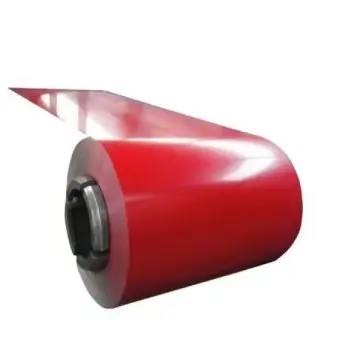
Double-Coated Prepainted PPGI Steel Coils
Color-coated coils designed for forming weather-resistant cladding and retaining barrier screens for construction sites.
Access Coil Portal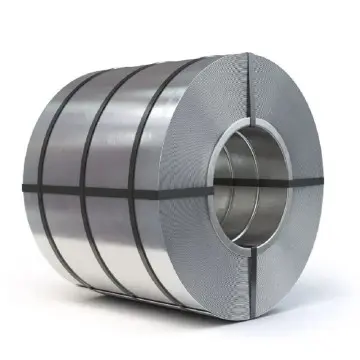
DX51D–DX54D High Zinc Galvanized Coils
Continuously dipped high-zinc coated coils applied in cold-formed structural sections and durable site panels.
Evaluate Galvanized Coil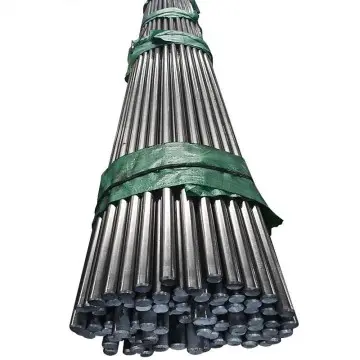
Galvanized Plain Round Solid Anchor Bars
Solid carbon round bar designed for threaded tie-rods, anchor bolt brackets, and retaining wall linkages.
Select Round Bars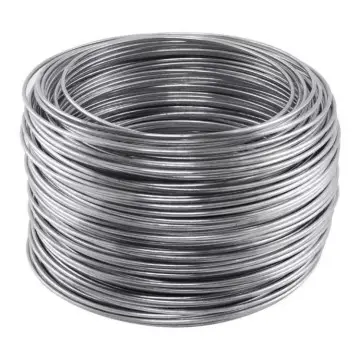
SAE1080 / Q235 Hot Rolled Carbon Wire Rod
High-tensile wire rod suitable for cold drawing, reinforcement mesh, and foundation anchoring cable production.
Review Wire Rods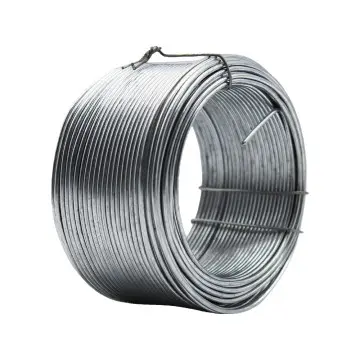
SAE1006 / SAE1008 Cold Drawn Industrial Wire
Precision-drawn low carbon wire designed for structural hardware fabrication and industrial fastener forming.
Inquire Drawn Wire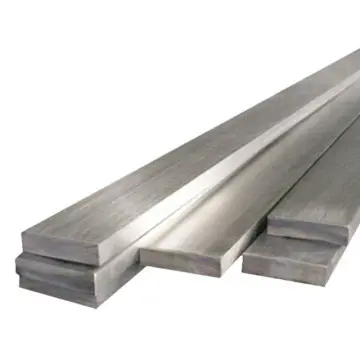
Mill-Finish Q235B Carbon Structural Flat Bar
Hot rolled structural flats suited for shear cutting, bolt hole punching, and custom flange gusset welding.
Access Flat Stock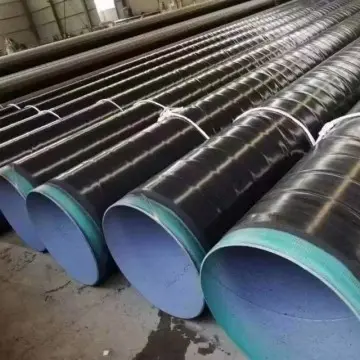
Epoxy-Coated High Strength Industrial Pipe
Heavy gauge steel pipe treated with anti-corrosion barrier coatings for maritime foundation struts and utility lines.
Examine Pipe Range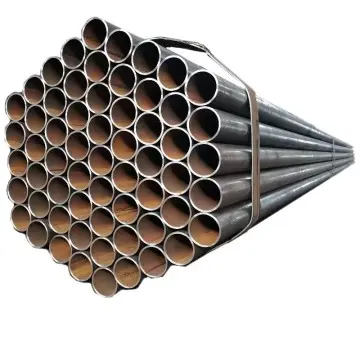
Standard Welded Black Steel Structural Pipe
General structural pipes utilized in cofferdam diagonal bracing, lateral strutting systems, and temporary staging.
View Black PipesInitiate Your Comprehensive Steel Piling Bill of Materials
Send your required profiles, tonnages, target delivery ports, and engineering drawings to receive a consolidated quotation with full mill certifications.