
Featured Electrical Conduit & Cable Duct Solutions
Explore top-grade modified polymer conduits, power cable encasements, and trenchless engineering sleeves manufactured under strict dimensional control and tested to international electrical engineering standards.
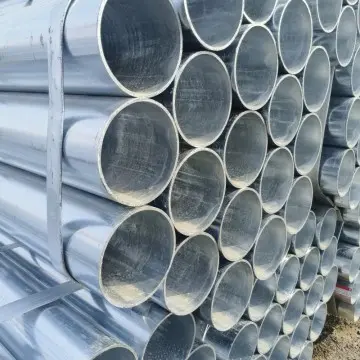
Underground Power Conduit Pipes
Engineered for deep-burial trenchless horizontal directional drilling (HDD), offering high ring stiffness and exceptional thermal stability for HV transmission lines.
View Specifications →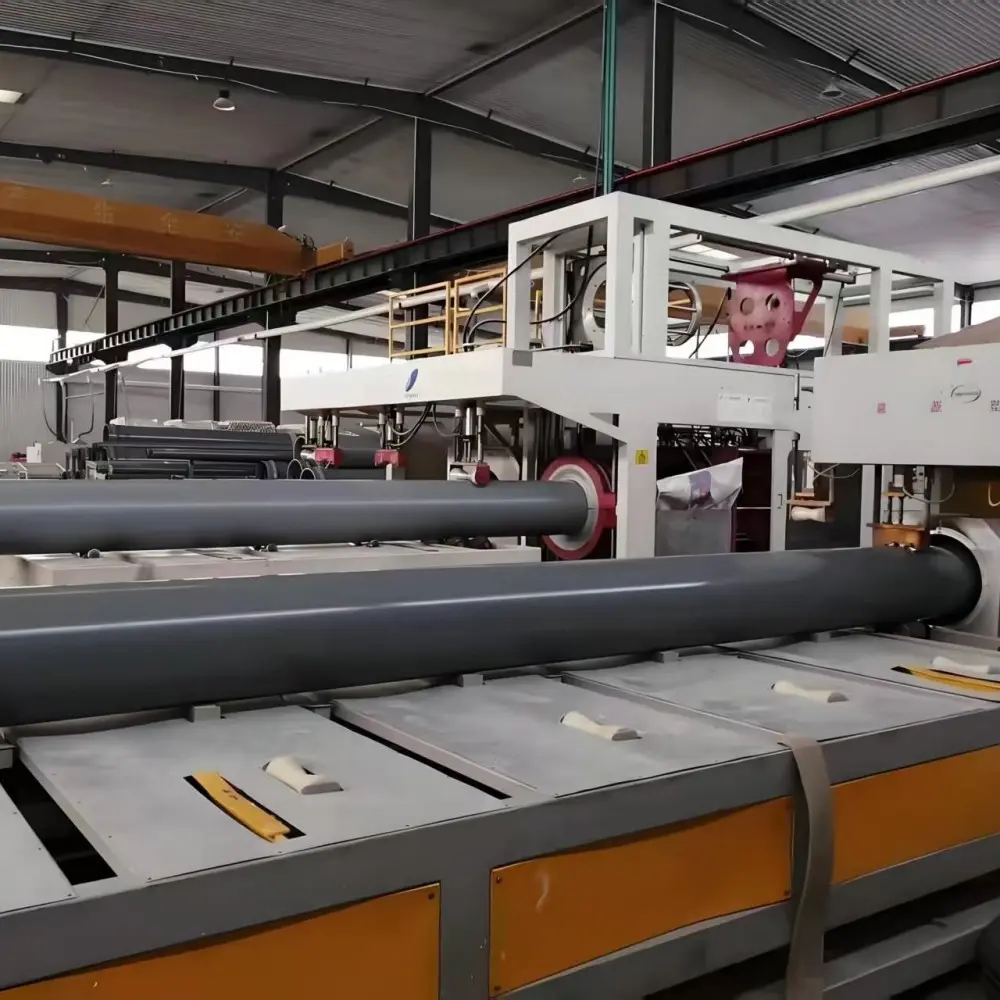
Telecom & Communication Ducts
Solid wall and corrugated sub-duct conduits designed for fiber-optic and signaling line protection with low internal friction coefficients for long-distance blowing.
View Specifications →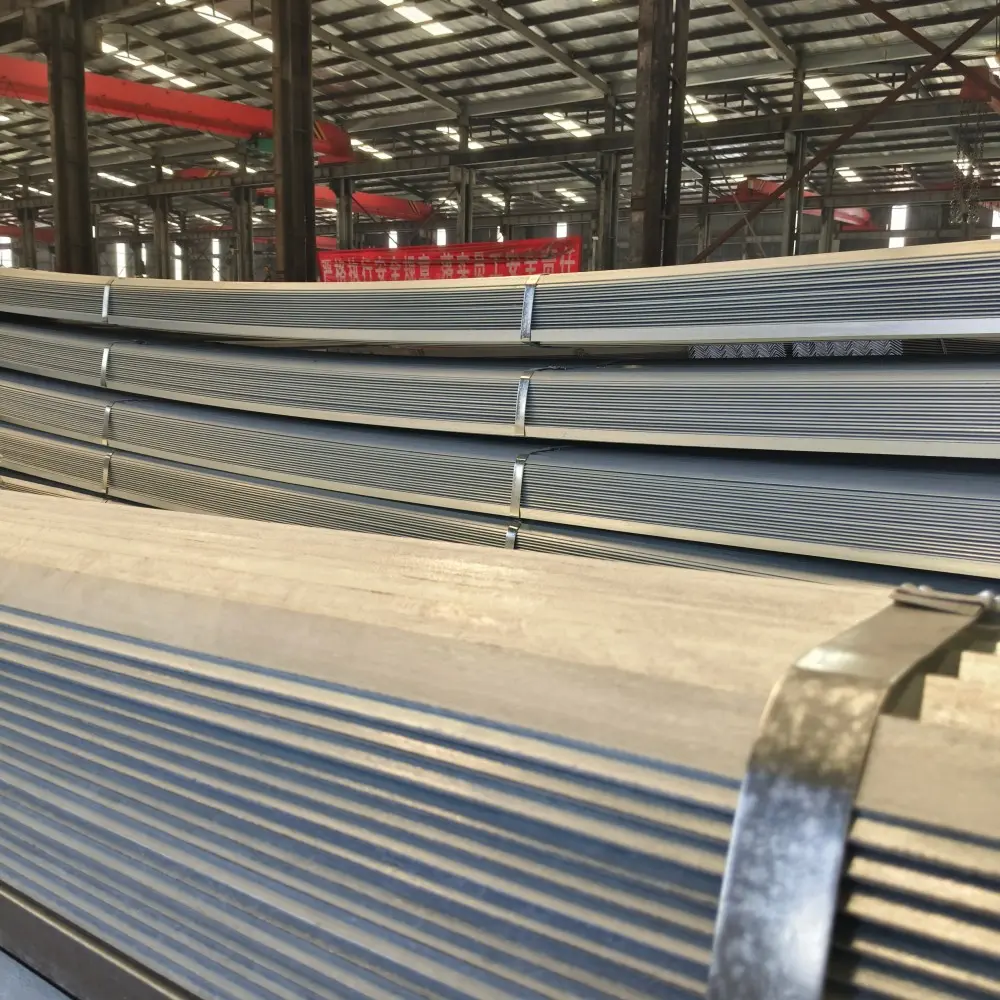
Plastic Building Materials & Sleeves
Comprehensive array of civil construction sleeves, mechanical MEP conduits, and high-impact polymer fittings tailored for commercial megastructures.
View Specifications →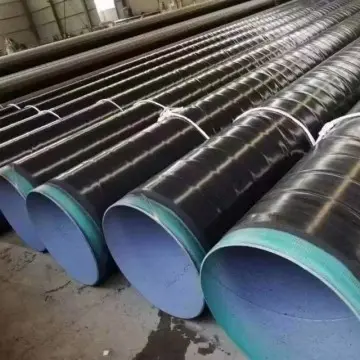
Industrial Metallic Encasement Pipes
High-strength carbon and galvanized casing pipes utilized as secondary road-crossing containment sleeves for primary polymer electrical ducts.
View Specifications →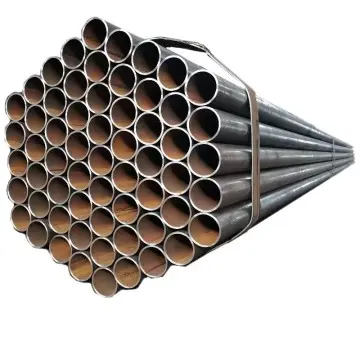
Subsurface Drainage & Sump Ducts
Corrosion-proof drainage pipelines configured for electrical vault dewatering, utility corridor leachate extraction, and substation water management.
View Specifications →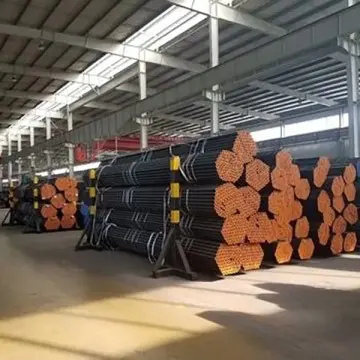
Industrial Pressure Piping Systems
High-density multi-purpose carrier pipes featuring exceptional hydro-burst strength, integrated into unified utility trench installations alongside power conduits.
View Specifications →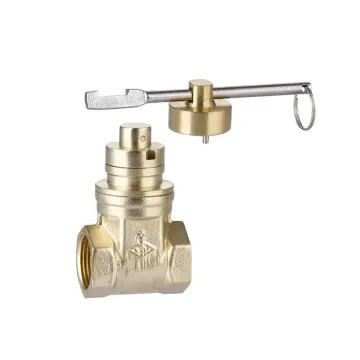
Engineered Gas & Hazardous Containment
Impermeable utility pipelines manufactured under zero-defect protocols, preventing gas percolation into adjacent electrical duct banks and utility manholes.
View Specifications →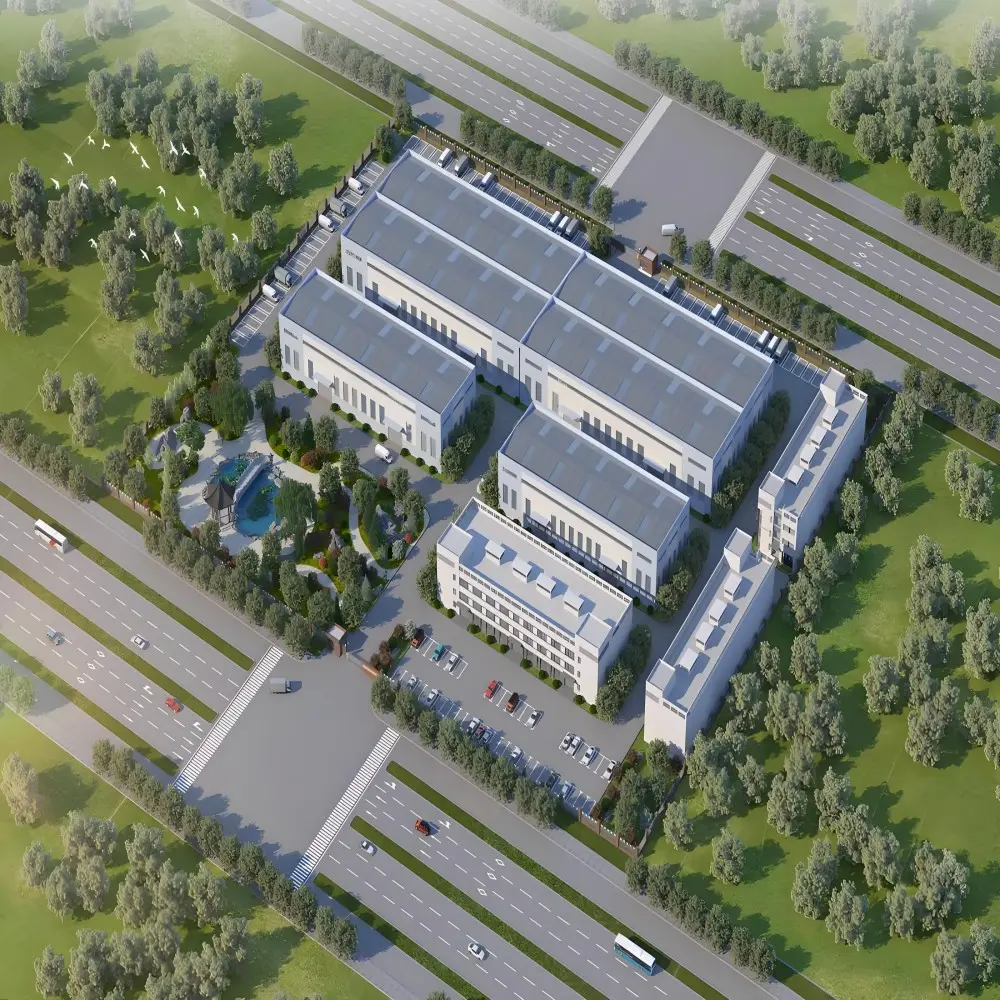
Consolidated EPC Project Packages
Turnkey delivery combining MPP power conduits, structural steel brackets, and substation transformer foundations in single consolidated freight manifests.
View Specifications →Engineering Architecture of Modified Polypropylene (MPP) Electrical Conduits
Why power grid operators, municipal utility commissions, and high-voltage transmission engineers are transitioning from conventional PVC, CPVC, and HDPE conduits to advanced Modified Polypropylene systems.
1. Chemical Composition & Molecular Toughening Mechanisms
Modified Polypropylene (MPP) power cable conduit represents a macroscopic breakthrough in high-voltage underground transmission engineering. Formulated using high-molecular-weight polypropylene random copolymer (PP-R) or impact block copolymer (PP-B) as the base resin, the polymer chain undergoes precise grafting modification. Through the introduction of specialized elastomer tougheners, sub-micron inorganic reinforcement whiskers, and nano-silica thermal stabilizers, MPP overcomes the intrinsic notch sensitivity and low-temperature brittleness of standard polypropylene while preserving superior flexural modulus and thermal endurance.
Under continuous high-voltage electrical cable operation, high amperage inevitably induces joule heating, raising continuous conduit core temperatures above 70°C, with short-circuit emergency spikes exceeding 130°C. Conventional High-Density Polyethylene (HDPE) suffers sharp tensile relaxation and ring stiffness degradation at temperatures beyond 40°C, causing radial deformation under high soil overburden pressure. MPP conduits sustain structural integrity up to continuous service temperatures of 95°C to 110°C with a Vicat Softening Point exceeding 135°C, effectively eliminating duct collapse risks and subsequent cable entrapment during emergency grid overloads.
Material Performance Comparison: MPP vs. CPVC vs. HDPE vs. Rigid Metallic Steel Conduits
| Performance Characteristic | Modified Polypropylene (MPP) | High-Density Polyethylene (HDPE) | Chlorinated Polyvinyl (CPVC) | Galvanized Rigid Steel (GRC) |
|---|---|---|---|---|
| Continuous Temperature Rating | -10°C to +105°C | -40°C to +45°C | 0°C to +80°C | -50°C to +250°C |
| Vicat Softening Temperature | ≥ 135°C – 155°C | ≈ 110°C – 120°C | ≈ 100°C – 115°C | > 1000°C |
| Tensile Strength at Yield (23°C) | ≥ 24.0 MPa | ≥ 19.0 MPa | ≥ 45.0 MPa (Brittle) | ≥ 310 MPa |
| HDD Trenchless Pulling Suitability | Exceptional (Elastic & Rigid) | Good (Prone to Necking) | Poor (High Risk of Brittle Fracture) | Fair (Heavy, Expensive Coupling) |
| Dielectric Strength (kV/mm) | ≥ 30.0 kV/mm | ≥ 25.0 kV/mm | ≥ 20.0 kV/mm | 0 (Conductive / Requires Earthing) |
| Eddy Current Losses in HV Lines | Zero (Non-Magnetic) | Zero (Non-Magnetic) | Zero (Non-Magnetic) | Severe (High Induced Thermal Loss) |
| Friction Coefficient (μ) with XLPE | ≤ 0.25 (Ultra-smooth) | ≤ 0.30 | ≈ 0.35 – 0.40 | ≥ 0.55 (Abrasion Hazard) |
| Chemical & Soil Acid Corrosion Resistance | Immune (pH 1 – 14) | Immune (pH 1 – 14) | High (Susceptible to Ketones) | Prone to Galvanic Cell Rusting |
China's Factory Supply Chain Hegemony: Daqiuzhuang & Tianjin Mega-Hubs
An insider review of how concentrated raw material compounding, continuous high-output vacuum sizing extrusion lines, and northern maritime logistics drive insurmountable commercial value for overseas buyers.
Daqiuzhuang Industrial Concentration
Originating from China's primary pipeline and structural material center in Daqiuzhuang, Jinghai District, Tianjin, our manufacturing footprint integrates raw monomer polymer refining, customized modifier masterbatch formulation, and advanced twin-screw compounding within a 20-kilometer perimeter. This tight-knit clustering minimizes raw material transit costs and allows rapid shifts between specialized SDR classes.
Automated Continuous Extrusion
Our 1,500-acre production facilities in Tianjin and Tangshan operate multi-strand high-speed extrusion lines equipped with ultrasonic wall-thickness gravimetric tracking. Every millimeter of conduit wall is scanned dynamically, maintaining tight dimensional concentricity, eliminating micro-voids, and guaranteeing uniform hoop strength along standard 6-meter, 9-meter, or 12-meter lengths.
Consolidated Maritime Logistics
Direct highway corridors to Tianjin Xingang Port (less than 60 minutes) afford unrivaled logistics efficiency. International EPC contractors take advantage of "Telescopic Nesting" packaging—sliding smaller diameter conduits (such as OD 110mm and OD 160mm) inside larger OD 200mm, 250mm, or 315mm casings—reducing ocean freight cube volume by up to 52% and cutting unit landed procurement expenses.
Procurement Engineering Criteria: Wall Thickness (SDR) & Rigidity Ratings
Precision dimensional selection protocol based on standard dimension ratios (SDR), burial depths, hydro-static water tables, and vehicular surcharge load calculations.
1. Ring Stiffness & Earth Pressure Modeling
For deep-burial applications beneath arterial highways, rail rights-of-way, or container terminals, static soil load ($P_s$) and dynamic traffic surcharge loads ($P_t$) dictate minimum conduit ring stiffness (SN). Conduits are categorized into:
- Ordinary Trenching Type (Class O): Ring stiffness ≥ 4.0 kN/m² (SN4), designated for open-cut trench burial beneath non-trafficked greenbelts or sidewalk pedestrian zones with backfill depth ≤ 2.5 meters.
- Reinforced Trenchless Type (Class R / HDD): Ring stiffness ≥ 8.0 kN/m² (SN8) to ≥ 16.0 kN/m² (SN16), engineered specifically for pull-back tensile stress, reamer mud pressure, and dynamic hydro-static pressures encountered during guided directional drilling up to depths of 18 meters.
2. Standard Dimension Ratio (SDR) Dimensional Matrix
The Standard Dimension Ratio (SDR = Outside Diameter $D_n$ / Wall Thickness $e_n$) directly governs both tensile pull-back force capacity during HDD installation and radial collapse resistance:
- SDR 9 & SDR 11 (Heavy HDD Grade): Highest radial collapse strength and tensile endurance. Mandatory for deep watercourse crossings, marshland sub-drilling, and high gravel geological formations.
- SDR 13.6 (Standard Engineering Grade): Optimal balance of tensile strength, inner passage clearance, and material economics. Standard specification for 110kV/220kV municipal power corridors.
- SDR 17 (Light Duct Grade): Employed in non-critical open-trench duct bank encasement within concrete slurry envelopes.
Comprehensive MPP Dimension, SDR & Ring Stiffness Engineering Chart
| Nominal OD ($D_n$, mm) | SDR Class | Nominal Wall ($e_n$, mm) | Tolerance (mm) | Ring Stiffness (SN) | Recommended Pull Force Max (kN) | Primary Utility Target |
|---|---|---|---|---|---|---|
| Φ 110 mm | SDR 11 | 10.0 mm | +1.2 / 0 | ≥ 16 kN/m² (SN16) | 58 kN | 10kV – 35kV Distribution Cabling |
| Φ 160 mm | SDR 13.6 | 11.8 mm | +1.4 / 0 | ≥ 10 kN/m² (SN10) | 115 kN | 35kV – 110kV Feeder Circuits |
| Φ 180 mm | SDR 13.6 | 13.3 mm | +1.5 / 0 | ≥ 10 kN/m² (SN10) | 148 kN | 110kV High-Voltage Urban Transmission |
| Φ 200 mm | SDR 11 | 18.2 mm | +2.0 / 0 | ≥ 18 kN/m² (SN18) | 230 kN | 110kV Deep River Crossings (HDD) |
| Φ 225 mm | SDR 13.6 | 16.6 mm | +1.8 / 0 | ≥ 10 kN/m² (SN10) | 245 kN | 220kV Extra-High-Voltage (EHV) Lines |
| Φ 250 mm | SDR 11 | 22.7 mm | +2.4 / 0 | ≥ 18 kN/m² (SN18) | 360 kN | 220kV Heavy Substation Interties |
| Φ 315 mm | SDR 13.6 | 23.2 mm | +2.5 / 0 | ≥ 12 kN/m² (SN12) | 520 kN | 500kV Main Duct Trunk / Multi-Bundle |
Quality Control, Mill Test Certification & Compliance Standards
Navigating cross-border electrical utility compliance. How our testing regimes correspond to GB, ASTM, IEC, DIN, and NEMA power infrastructure codes.
Testing Normatives & Codes
Our factory testing protocols strictly abide by GB/T 24721.2-2009 (Polymer conduits for underground power cables) and the State Grid Corporation standard DL/T 802.7-2010. For overseas integration, conduits align with mechanical, thermal, and dielectric specifications equivalent to IEC 61386-24, ASTM F2160, ASTM D2412, and NEMA TC-7.
MTC & Lot Documentation
Every production batch is accompanied by genuine Mill Test Certificates (MTC Type 3.1) showing verifiable physical and electrical metrics: Melt Flow Rate (MFR), Density (g/cm³), Carbon Black Dispersion, Yield Tensile Strength, Elongation at Break (≥ 150%), Ring Stiffness, and Dielectric Breakdown Strength (> 30 kV/mm).
Third-Party Inspection Support
To mitigate cross-border procurement exposure, overseas buyers are fully supported in commissioning independent third-party testing agencies (including SGS, Bureau Veritas, TÜV, or Intertek). Inspectors are provided on-site access to witness dimensional verification, drop weight impact testing at -5°C, hydrostatic burst testing, and factory container loading.
Mission-Critical Deployment Scenarios for MPP Conduits
Real-world operational implementations where modified polypropylene provides absolute electrical security, mechanical protection, and extended 50-year service life.
1. Trenchless HDD Crossings Under Waterways & Rail Lines
In urban riverbed bores and railway embankment underpasses where open excavation is prohibited, MPP conduits serve as the primary carrier sleeve. Conduits are joined via automated thermal butt-fusion welding into continuous thousands-of-meter strings. The resulting welded joint delivers tensile strength equal to or exceeding 95% of the pipe body, preventing joint rupture when subjected to massive pull-back forces through reamed bentonite slurry tunnels.
2. 110kV – 500kV Substation Transmission Corridors
Substation ingress and switchyard feeder vaults concentrate dense bundles of high-voltage transmission cables. Under continuous full-capacity generation, heavy eddy currents induce severe inductive heating in traditional metallic conduit enclosures. MPP’s completely non-magnetic, dielectric structure eliminates induction heating losses entirely, protecting cable insulation from heat degradation and mitigating grid transmission power losses.
3. Renewable Energy Farms: Solar PV & Offshore Wind Landfall
Utility-scale solar farms across alkaline desert soils and offshore wind inter-array subsea cable landing stations expose raceways to extreme chemical hostility and fluctuating water tables. MPP conduits resist chemical leaching across pH 1 through 14, withstand chloride ion attacks in coastal salt-marsh zones, and maintain high ring stiffness in soft, saturated soil matrices.
Future Evolution of Electrical Polymer Conduits
Key technological trends shaping the next decade of power cable conduit design and sustainable underground utility construction.
Graphene-Enhanced Thermal Conduction
Next-generation MPP formulations incorporate surface-treated graphene nanoplatelets into the polypropylene copolymer matrix. This raises conduit thermal conductivity from 0.22 W/(m·K) to over 0.65 W/(m·K), allowing internal cable heat to dissipate outward into surrounding backfill soil significantly faster, thereby lifting continuous cable ampacity ratings by up to 12%.
Co-Extruded Ultra-Low Friction Liners
Multi-layer co-extrusion technology embeds a microscopic fluoropolymer or silicone-modified glide layer along the internal conduit wall. This drives the kinetic friction coefficient down to below 0.12, allowing winching teams to pull heavy copper cross-linked cables across distances exceeding 400 meters without intermediate splice vaults or pulling-grip cable jacket abrasion.
Halogen-Free UL94 V-0 Flame Retardancy
To address fire propagation hazards within bridge crossings and airport underground cable vaults, advanced intumescent non-halogen flame retardants are compounded directly into the resin. Upon exposure to high-energy arc flashovers, the conduit generates a dense protective char layer without halogenated fumes, meeting UL94 V-0 and IEC 60332 flammability ratings.
Frequently Asked Technical & Commercial Questions
In-depth engineering answers addressing installation methods, chemical distinctions, freight consolidation, and testing parameters for overseas EPC buyers.
While High-Density Polyethylene (HDPE) is widely used for water piping, its molecular configuration becomes soft and loses structural stiffness at elevated temperatures. High-voltage power cables generate sustained operational heat (70°C–90°C). At 70°C, HDPE’s tensile yield strength and ring stiffness drop by more than 50%, posing serious risks of radial collapse under soil overburden pressure. In contrast, Modified Polypropylene (MPP) features a Vicat softening point exceeding 135°C and preserves high ring stiffness and flexural rigidity under high-temperature electrical loading. Furthermore, MPP provides higher tensile modulus at ambient temperatures, preventing localized necking during HDD trenchless pulling operations.
MPP conduits are joined almost exclusively via thermal butt-fusion welding using dedicated polyolefin pipe fusion equipment. The pipe ends are planed, aligned, and heated with an electro-thermal hot plate at approximately 210°C – 230°C under specified hydraulic bead-up pressure. Once the melt bead reaches the required height, the heating plate is removed and the pipe faces are fused together under dwell pressure until fully cooled. When executed to standard engineering parameters, the butt-welded joint forms a homogenous molecular weld with tensile strength matching or exceeding 95% of the virgin pipe wall, eliminating the risk of separation during long-distance directional pull-backs.
Yes. This is one of our primary value-engineering strategies for global buyers. Because MPP pipes are manufactured in standard dimensional increments (e.g., OD 110mm, 160mm, 200mm, 250mm, and 315mm), we routinely perform multi-tier "telescopic nesting." For example, an OD 110mm conduit is nested inside an OD 160mm conduit, which can be further inserted into an OD 225mm or 250mm pipe. This loading methodology doubles or triples the total linear footage shipped inside a 40-foot High Cube (40HC) container, reducing ocean freight costs per linear meter by 40% to 55%.
The international and Chinese standard color for MPP power conduits is bright industrial orange (RAL 2003 / RAL 2004), which serves as an immediate visual warning to third-party excavation crews that high-voltage electrical infrastructure is buried beneath. However, for specialized telecommunications, defense, or water installations, conduits can be compounded in black (with permanent orange or green co-extruded identification stripes), blue, or custom project shades. Laser marking is applied along the pipe crown every 1 meter, detailing manufacturer ID, outer diameter, SDR class, standard designation, production batch number, and meter count marking.
Our automated extrusion lines incorporate high-voltage inline spark testing alongside continuous ultrasonic gauge wall scanning. In the spark testing protocol, an electric corona brush envelops the newly extruded polymer pipe as it exits the calibration cooling chamber. Any void, micro-fissure, or thin spot in the pipe wall triggers an electrical ground path, causing an alarm, logging the flaw coordinates, and triggering an automated cutoff rejection mechanism. Additionally, finished pipes undergo factory hydrostatic pressure testing and high-voltage dielectric breakdown testing in accordance with GB/T 24721.2.
Structural, Piping & Power Infrastructure Products
Consolidate your bill of materials (BOM) with complementary structural profiles, metallic conduit channels, grounding flat bars, and valves shipped in unified project consignments.
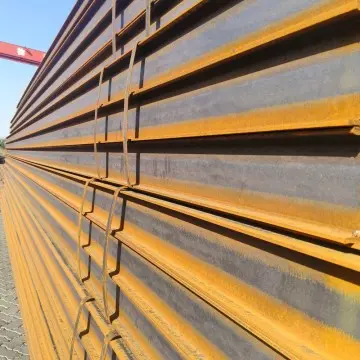
Structural H-Beam Profiles
Heavy structural framing columns and substation dead-end structures fabricated from A36/Q235/Q355 carbon steel with custom hot-dip galvanizing.
View Specifications →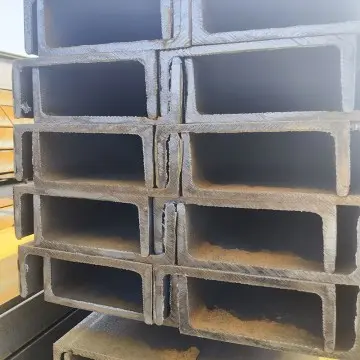
Hot-Dip Galvanized Channel Steel
Precision C & U channel steel used as cable duct bank mounting brackets, conduit racking supports, and utility tunnel framing systems.
View Specifications →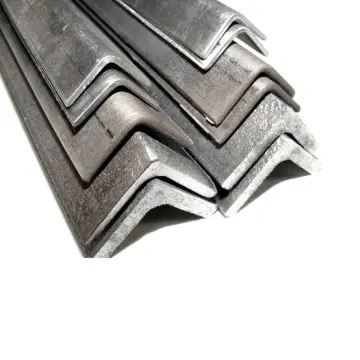
Galvanized Structural Angle Steel
Equal and unequal angle steel suitable for electrical transmission towers, substation switchyard gantries, and conduit trench edge armor.
View Specifications →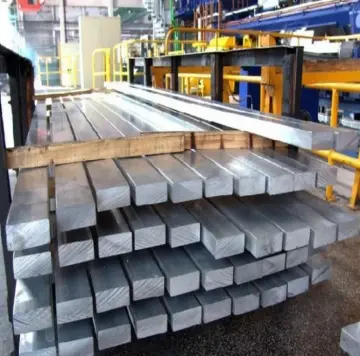
HDG Grounding Flat Steel Bar
High-zinc coating flat bar (3–60mm thickness) designed for electrical ground grids, lightning dissipater grounding mats, and cathodic utility bonds.
View Specifications →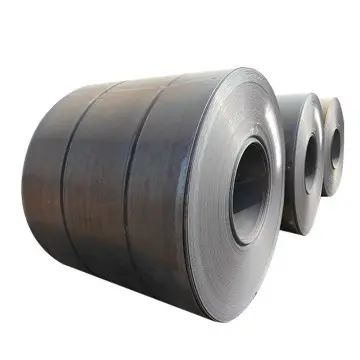
Galvanized & Prepainted Steel Coils
DX51D & Q235B high-formability coils utilized in roll-forming electrical cabinet enclosures, transformer housings, and cable trays.
View Specifications →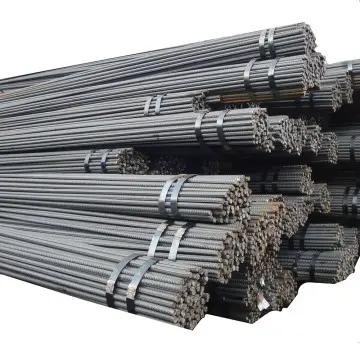
Deformed Concrete Rebar & Rods
High-tensile reinforcement rebar (6mm–32mm) for electrical manholes, transformer blast walls, concrete-encased duct banks, and vaults.
View Specifications →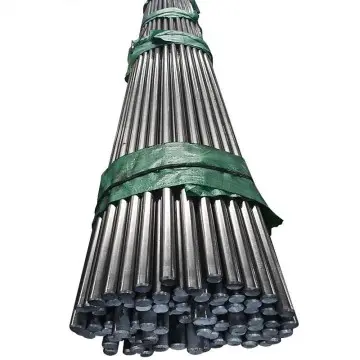
Galvanized Solid Round Bars
Solid carbon steel round rods for deep lightning-arrestor ground stakes, precision machining parts, and electrical equipment shafts.
View Specifications →
Industrial Flow & Isolation Valves
Comprehensive gate, butterfly, and check valve packages engineered for transformer cooling loops, substation fire deluges, and vault sumps.
View Specifications →Initiate Your MPP Conduit Procurement Quotation
Connect with our senior polymer engineering team in Daqiuzhuang, Tianjin. Review dimensional schedules, confirm localized compliance standards, request mill test documentation, and obtain factory-direct ocean container pricing.