Primary Electrical Conduit & Structural Solutions
Direct-from-plant manufacturing capabilities supporting turnkey power utility, industrial transmission, and municipal infrastructure procurement.
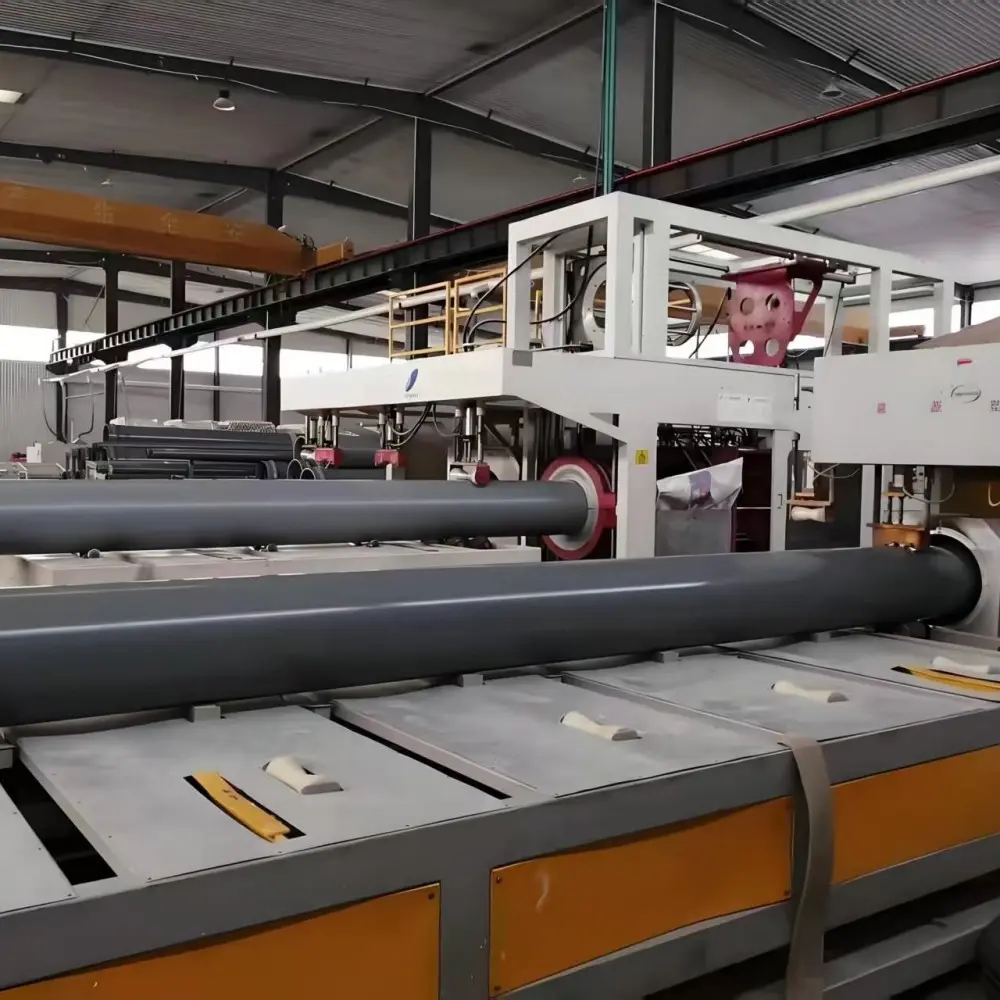
Trenchless MPP Power Cable Conduit
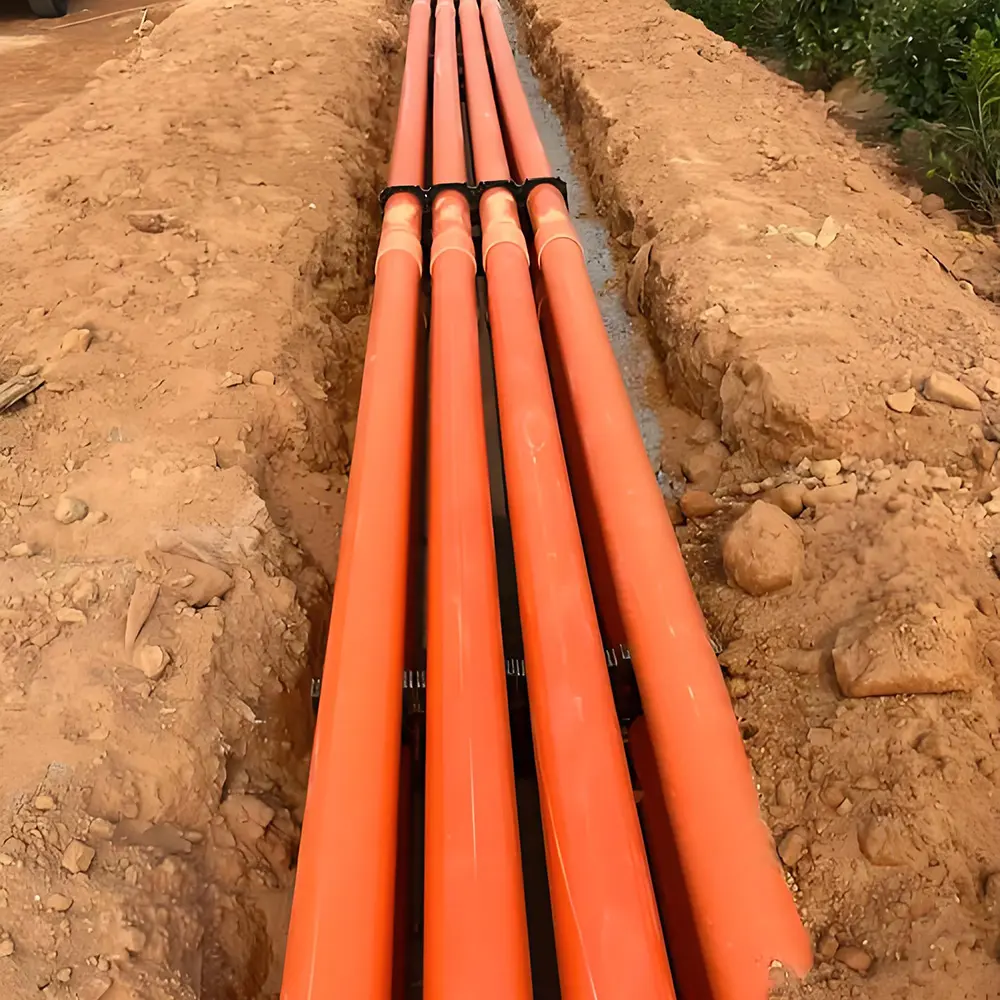
Telecom & Fiber Optic Sub-Ducts
Engineered Plastic Infrastructure
Heavy Municipal Drainage Pipes
Heavy HDG Steel Casings & Pipes
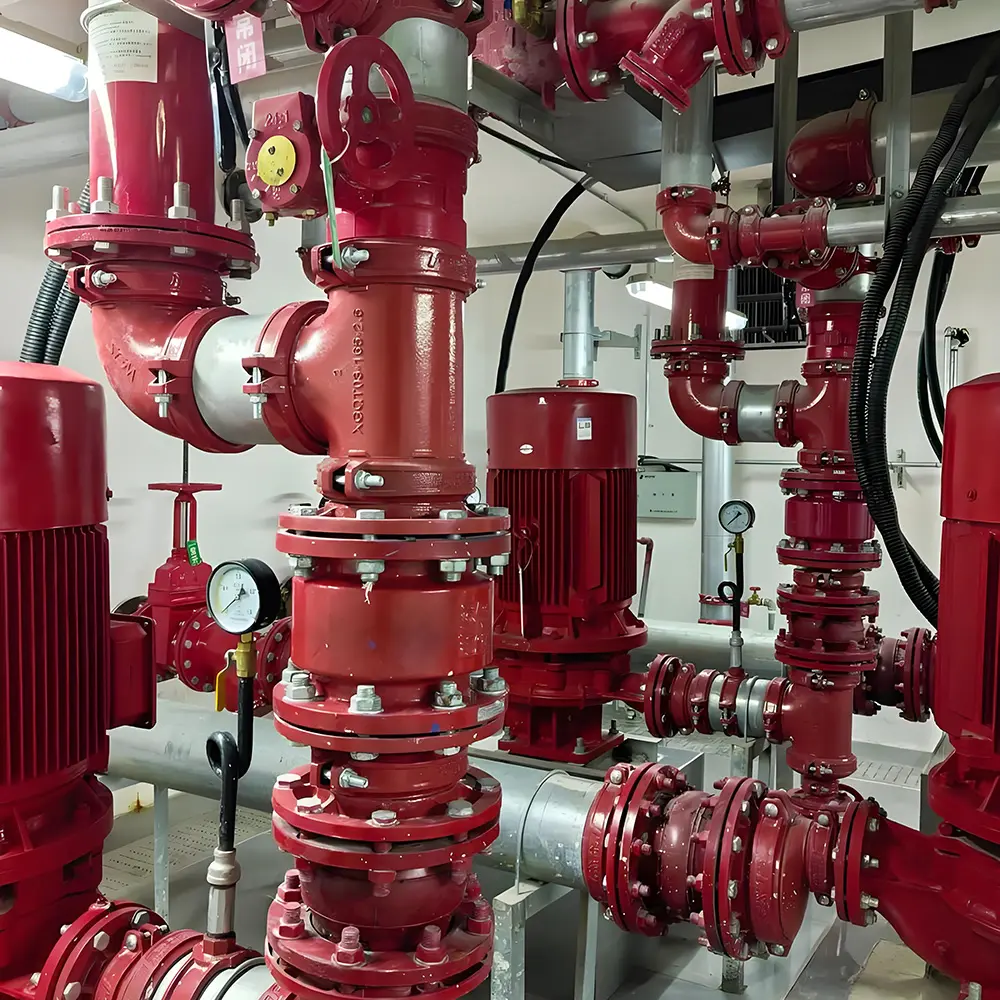
Pressure Water Supply Lines
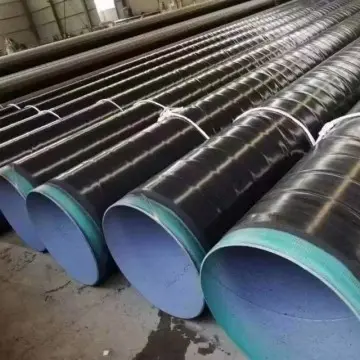
Gas Transmission Piping Systems
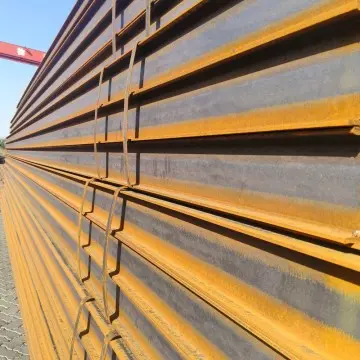
Substation Framing H-Beams
Engineering Architecture of Modified Polypropylene (MPP) Electrical Conduits
Modified Polypropylene (MPP) electrical conduits are engineered specifically to overcome the physical and thermal limitations of standard polyolefins (HDPE) and rigid vinyls (PVC-U/CPVC) in critical power distribution. Utilizing a base of high-crystallinity polypropylene homopolymer grafted with elastomeric impact modifiers and specialized thermal stabilizers, MPP provides an unparalleled strength-to-weight ratio, exceptional high-temperature load resistance, and outstanding dielectric properties for modern subterranean utility engineering.
Thermal Loading & Heat Deflection
High-voltage cables (10kV to 220kV) generate sustained ohmic resistance heat. Standard HDPE conduits soften dramatically when temperatures breach 60°C, risking wall collapse under backfill pressures. MPP maintains continuous structural integrity up to 70°C–80°C, with a Vicat Softening Temperature ≥ 120°C and short-circuit thermal tolerance reaching 130°C without wall buckling or localized thermal fatigue.
- Vicat Softening Temp≥ 120 °C
- Operating Service Temp-20 °C to +85 °C
- Short-Circuit SpikeUp to 130 °C
Trenchless HDD Tensile Integrity
During Horizontal Directional Drilling (HDD) pull-back operations across highways, waterways, and urban intersections, conduits experience acute pulling forces combined with dynamic torsional stress. Unlike brittle CPVC which snaps under rapid shock-loads, MPP exhibits high tensile yield strength (≥ 24.0 MPa) and ductile elongation, preventing catastrophic ruptures during high-tonnage reaming and conduit pulling.
- Tensile Yield Strength≥ 24.0 MPa
- Elongation at Break≥ 150 %
- Impact ResistanceDrop Weight Pass (0°C/9kg)
Dielectric & Kinetic Properties
MPP provides a dry volume resistivity ≥ 1.0 × 10¹¹ Ω·m, preventing parasitic eddy current build-up and voltage leakage into adjacent telecom infrastructure. Furthermore, its smooth extruded inner bore features a kinetic friction coefficient (≤ 0.30), decreasing cable pulling tension by over 38% compared to cement or corrugated ducts, enabling single-pull cable installations exceeding 1,000 meters.
- Volume Resistivity≥ 1.0 × 10¹¹ Ω·m
- Internal Friction Factorμ ≤ 0.30
- Dielectric Breakdown≥ 30 kV/mm
| Performance Metric | Modified Polypropylene (MPP) | High-Density Polyethylene (HDPE) | Chlorinated Polyvinyl Chloride (CPVC) | Fiberglass Reinforced Epoxy (FRE) |
|---|---|---|---|---|
| Primary Installation Method | HDD Trenchless & Direct Burial | HDD & Open Trench | Open Trench Encased Only | Bridge Hangers & Trench |
| High-Temperature Ring Stiffness (60°C) | Maintains >85% Initial SN | Drops >55% (Severe Creep) | Maintains >80% Initial SN | Stable >90% |
| Tensile Yield Stress for Pull-back | High Ductile Yield (≥24 MPa) | Moderate (≥19 MPa) | Brittle Failure Risk | Very High (Rigid) |
| Inner Wall Coefficient of Friction | Very Low (0.25 - 0.30) | Low (0.30 - 0.35) | Moderate (0.40 - 0.45) | Moderate (0.38 - 0.42) |
| Electrochemical / Stray Current Hazard | Zero (High Dielectric) | Zero (High Dielectric) | Zero | Zero |
| Comprehensive System Unit Cost | Optimal Cost-to-Performance | Lowest Material Base Cost | Medium Material Cost | High Material & Fitting Cost |
The Worldwide Grid Undergrounding Revolution
International grid operators and engineering EPCs are accelerating underground cabling initiatives to counteract climate extremes, mitigate wildfire hazards, and service massive megawatt demands from AI hyperscale data campuses.
Renewable Transmission & BESS Grid Interconnects
Utility-scale photovoltaic fields, offshore wind cable landfall points, and centralized Battery Energy Storage Systems (BESS) require underground feeder lines carrying sustained multi-megawatt currents. MPP conduits prevent thermal entrapment and guarantee mechanical ring stiffness under dynamic soil conditions across tidal estuaries and heavy-load corridors.
Hyperscale AI Data Center Corridors
Modern AI clusters require 100MW to 500MW power feeds concentrated within compact metropolitan sub-districts. High conduit density creates overlapping thermal heat islands beneath roadways. Engineers specify reinforced Class B MPP duct banks to ensure conduits do not deform under collective thermal dissipation while allowing smooth cable replacement cycles.
Urban Non-Excavation (HDD) Regulations
Municipal authorities across Europe, North America, Southeast Asia, and the Middle East strictly prohibit open trench cutting across arterial roads and historic downtown networks. Non-excavation Horizontal Directional Drilling with seamless butt-fusion welded MPP conduits reduces surface traffic disruption by 85% and shortens civil project execution timelines by months.
Metro Transit & Electrified Rail Corridors
High-speed rail, suburban commuter networks, and inner-city subway lines deploy dedicated 27.5kV / 35kV traction feeder lines along track alignments. MPP provides zero electromagnetic interference, complete vibration dampening against ongoing dynamic ballast loading, and halogen-free fire resistance in confined tunnels and sub-ballast penetrations.
Daqiuzhuang Production Base: Scale, Integrated Supply & Port Proximity
Founded in 1996 in Tianjin's Daqiuzhuang Industrial Zone—globally renowned as China's premier pipe and structural manufacturing capital—Tianjin Huizhong Xinyu (HZXY) combines 1,500 acres of production bases across Tianjin and Tangshan to offer unprecedented manufacturing speed, quality control, and export logistics efficiency.
High-Output Automated Extrusion
Our pipe manufacturing facilities operate continuous multi-screw extrusion lines equipped with ultrasonic wall-thickness monitors and gravimetric dosing systems. Our resin compounding base performs exact melt-index formulation, delivering over 10 million tons of cumulative industrial capacity with strict outer diameter and circularity tolerances.
Project Consolidations (BOM Coverage)
Large transmission and substation projects require not just conduits, but structural steel framing, earthing flat bars, and drainage utilities. As an integrated manufacturer, HZXY bundles MPP conduits, hot-dip galvanized steel casing pipes, structural H-beams, and valves into consolidated ocean containers, slashing vendor management friction and saving 20%–35% in international ocean freight costs.
Tianjin Port Direct Multimodal Logistics
Located just 60 kilometers from Tianjin Xingang Port—Northern China's largest international maritime hub—our freight logistics fleet guarantees seamless container stuffing, customized export cradling, break-bulk charter loading, and fast transit times to 50+ countries across Africa, Southeast Asia, South America, and the Middle East.
2026 MPP Electrical Conduit Factory Pricelist & Engineering Specs
Indicative export reference rates (FOB Tianjin Port). Values depend on raw polymer raw index pricing, wall thickness (SDR schedule), ring stiffness class, and bulk volume contracts.
| Outer Diameter (OD) | Wall Thickness (mm) | Ring Stiffness Class | Standard Length | Primary Utility Application | Indicative Price (USD/m) |
|---|---|---|---|---|---|
| Φ 110 mm | 5.0 mm ± 0.3 | Normal (SN4 / Class A) | 6m / 12m / Coils | Low-Voltage 1kV-10kV Direct Burial / City Duct | $4.20 - $5.50 |
| Φ 110 mm | 8.0 mm ± 0.4 | Reinforced (SN8 / Class B) | 6m / 12m | Standard HDD Road / Highway Crossing | $6.40 - $7.80 |
| Φ 160 mm | 7.0 mm ± 0.4 | Normal (SN4 / Class A) | 6m / 12m | 10kV - 35kV Substation Distribution Runs | $8.90 - $10.60 |
| Φ 160 mm | 10.0 mm ± 0.5 | Reinforced (SN8 / Class B) | 6m / 12m | HDD Heavy Railway / Deep Waterway Crossings | $12.40 - $14.80 |
| Φ 200 mm | 9.5 mm ± 0.5 | Normal (SN4 / Class A) | 6m / 12m | 35kV - 110kV High-Voltage Single Cable Duct | $15.20 - $18.10 |
| Φ 200 mm | 13.5 mm ± 0.6 | Reinforced (SN8 / SN16) | 6m / 12m | Extra-Deep Pull-back (>10m Depth) / High Surcharge | $21.30 - $25.20 |
| Φ 225 mm | 14.0 mm ± 0.7 | Reinforced (SN8 / SN16) | 6m / 12m | 110kV Main Transmission Lines / Harbor Landfall | $26.50 - $31.80 |
| Φ 250 mm | 15.5 mm ± 0.8 | Reinforced (SN8 / SN16) | 6m / 12m | 220kV High-Power Transmission / River Underpasses | $33.80 - $39.50 |
| Φ 315 mm | 18.5 mm ± 1.0 | Heavy HDD Custom | 6m / 12m | Multi-Core Bundles / Ultra-Deep Industrial Feeder Ducts | $52.00 - $61.00 |
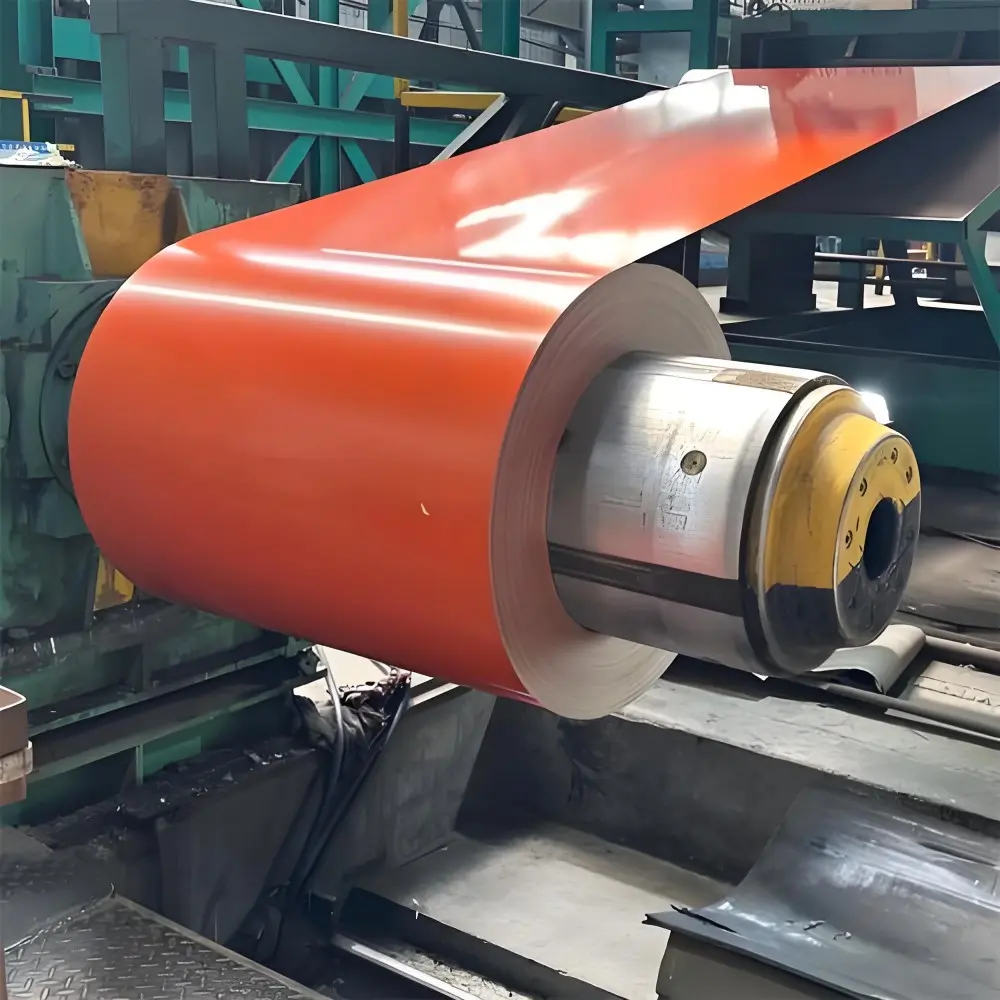
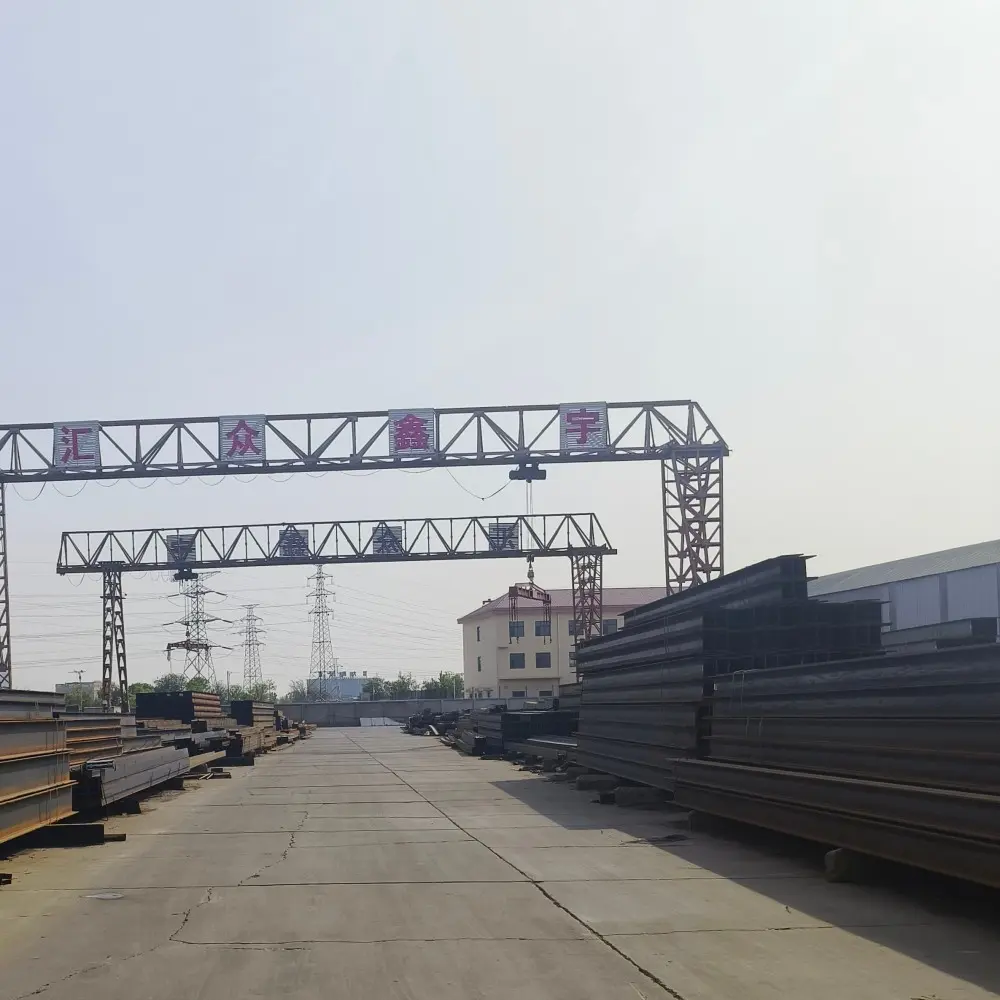
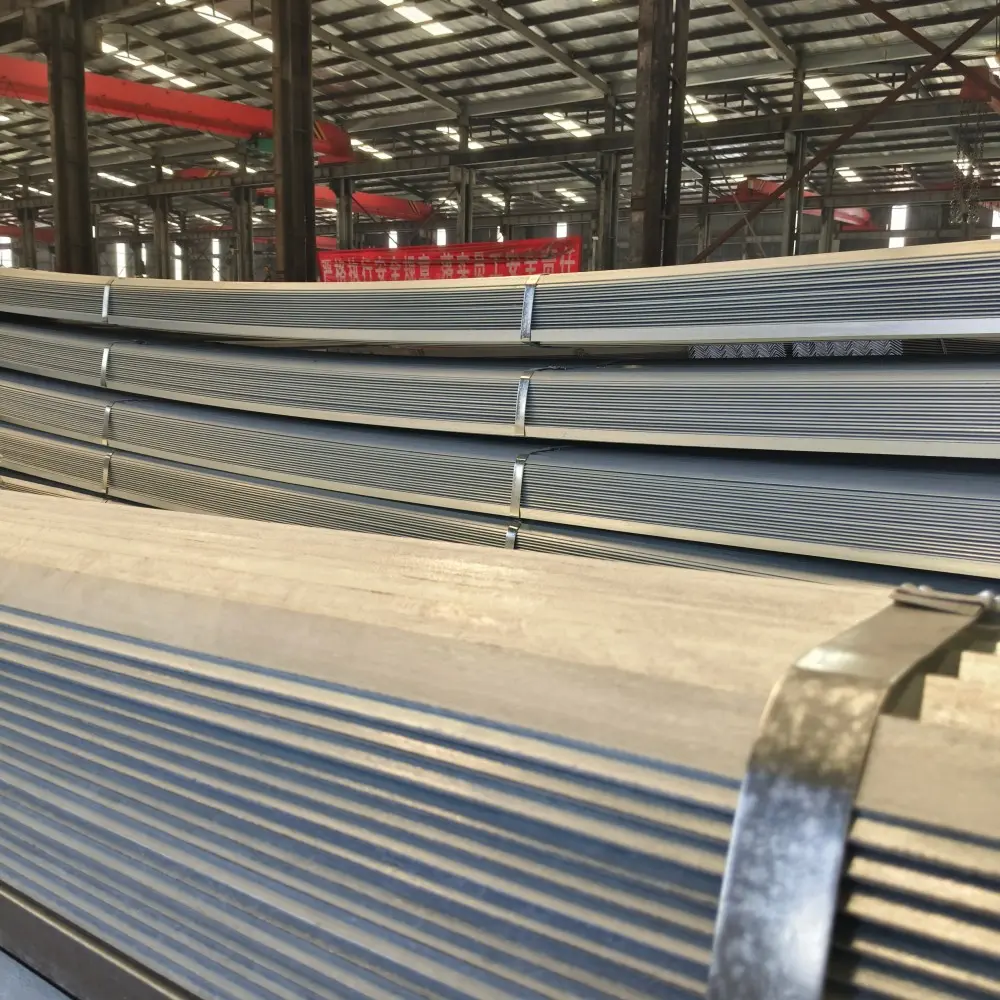
State-of-the-Art Factory Workshops & Production Facilities
Tour the facilities behind HZXY's three-decade legacy across Daqiuzhuang and Tangshan, where precision engineering meets global dispatch standards.
Trusted Across Global Landmark Infrastructure Projects
HZXY materials are specified by Tier-1 EPC contractors for mega-airports, sea-crossing bridges, Olympic venues, and critical government infrastructure.
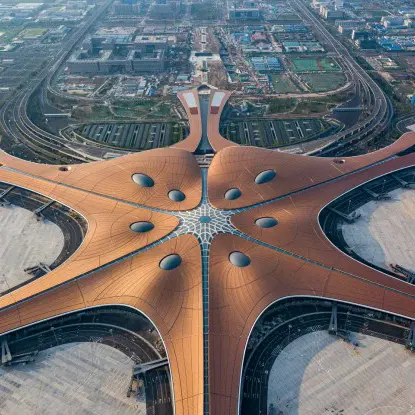
Beijing Daxing Int'l Airport
Comprehensive supply of high-grade utility piping, structural profiles, plates, and specialized industrial valves across terminal and apron ground works.
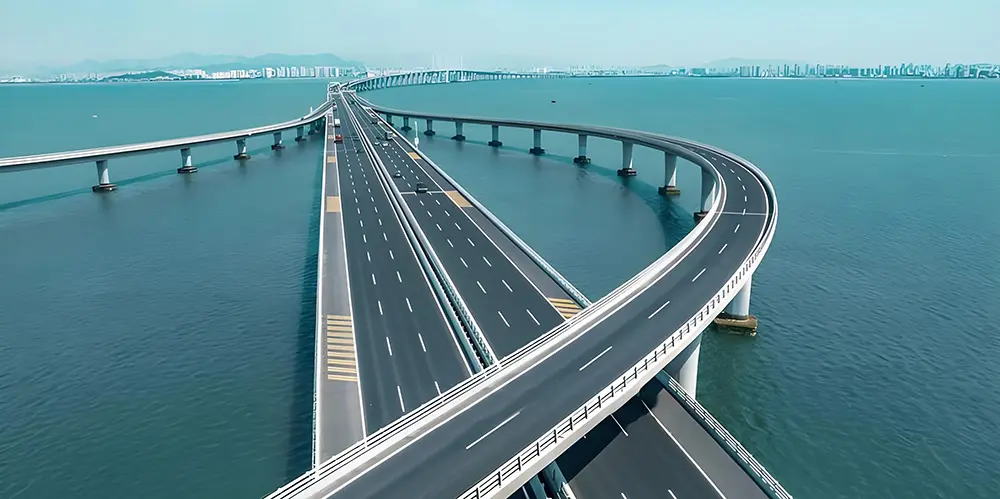
Jiaozhou Bay Marine Bridge
Heavy structural steel and corrosion-resistant pipeline materials engineered for long-span marine load-bearing and extreme salt-spray exposure.
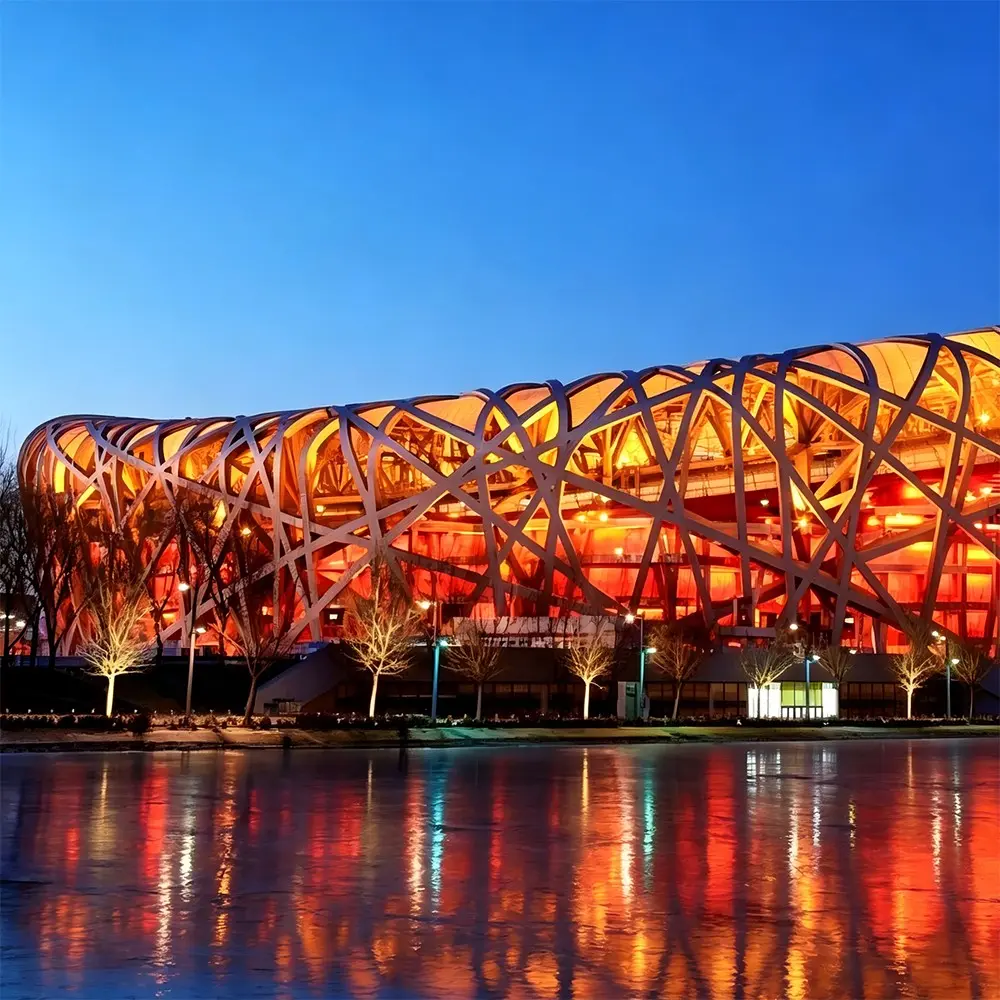
National Stadium (Bird's Nest)
Premium structural sections, precision-cut plate assemblies, and MEP utilities engineered for world-renowned long-span architecture.
Frequently Asked Questions: MPP Procurement, HDD & Logistics
Direct answers from our senior engineering and export logistics specialists to assist procurement directors in writing watertight specifications.
What is the fundamental chemical difference between MPP and standard HDPE pipe?
While HDPE (High-Density Polyethylene) is a homopolymer of ethylene, MPP (Modified Polypropylene) is synthesized through the graft copolymerization of polypropylene homopolymers with reactive elastomers and temperature-stabilizing compounds. This alteration dramatically elevates the Vicat Softening Temperature above 120°C (compared to ~65°C for HDPE), enabling MPP to resist creep and collapse when high-voltage power cables generate localized high temperatures under high continuous electrical loads.
How are MPP pipes joined in trenchless Horizontal Directional Drilling (HDD)?
For trenchless HDD applications, MPP pipes are primarily joined using automated butt-fusion welding. The pipe ends are trimmed, heated with a PTFE-coated heating plate to the melt transition zone (approx. 210°C–230°C), and fused under hydraulic pressure. This forms a continuous, leak-free joint whose tensile yield strength matches or exceeds the parent pipe, ensuring zero joint-pullout risk during subterranean reaming. For open-trench applications, spigot-and-socket joints with rubber elastomeric seals are also available.
What is the distinction between Class A (Normal) and Class B (Reinforced) MPP conduits?
Per industrial power duct standards (such as DL/T 802.7 and GB/T 24721), Class A (Normal type) features a standard wall thickness and ring stiffness (typically SN4 to SN6), recommended for shallow open-trench excavations and buried depths under 2.5 meters without dynamic heavy vehicle loads. Class B (Reinforced type) features thicker SDR walls and minimum SN8 to SN16 ring stiffness, engineered specifically for trenchless HDD under heavy freight corridors, highways, railways, and deep crossings exceeding 4 to 12 meters.
Can HZXY bundle electrical conduits with structural steel and casing pipes in a single shipment?
Yes. One of HZXY's most significant competitive advantages is our comprehensive procurement coverage. Overseas EPC buyers can combine MPP conduits, heavy-gauge steel casing pipes, hot-dip galvanized scaffolding/earthing pipes, structural H-beams, channel steel, and industrial valves inside the same ocean bill of lading. This prevents supplier fragmentation, ensures synchronized job-site delivery schedules, and drastically cuts container demurrage and administrative overhead.
What quality testing and third-party inspection certifications are provided before loading?
Every export shipment is dispatched with an authentic Mill Test Certificate (MTC) certifying chemical composition, Vicat Softening Point, ring stiffness, tensile yield stress, and dielectric strength. Furthermore, HZXY routinely facilitates on-site verification through world-renowned independent third-party agencies including SGS, BV (Bureau Veritas), and TÜV for dimensional verification, drop-hammer impact testing at 0°C, and ultrasonic wall verification prior to port containerization.
How does HZXY maximize container volume efficiency for international pipe shipments?
Because pipe hollows consume valuable cubic meter space, our Tianjin freight engineering team utilizes telescopic “nesting” protocols where smaller diameter pipes (e.g., Φ110mm) are loaded inside medium (Φ160mm) and larger conduits (Φ250mm). This reduces dead space by over 45%, maximizing the freight tonnage per 40ft High Cube container or break-bulk vessel, thereby yielding substantial savings on per-meter landed transport costs for global clients.
Industrial Metal, Conduit & Mechanical Solutions
Complete your civil duct bank, power station, or municipal infrastructure procurement from a single verified manufacturer.
Structural Steel Profiles & Columns
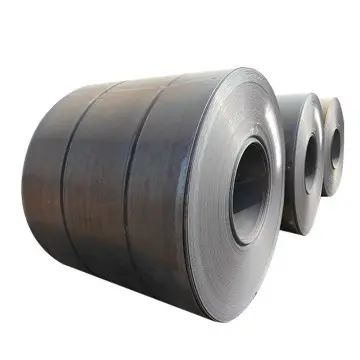
Galvanized & Prepainted Steel Coils
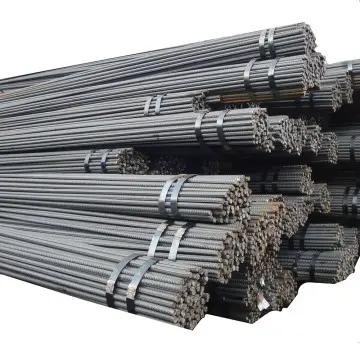
Deformed Concrete Rebar & Wire Rod
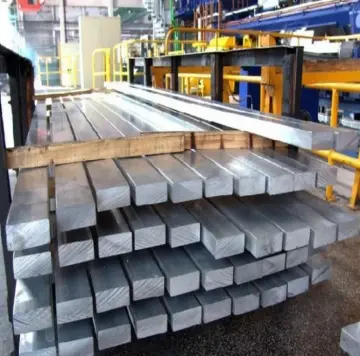
HDG Grounding & Earthing Flat Bar
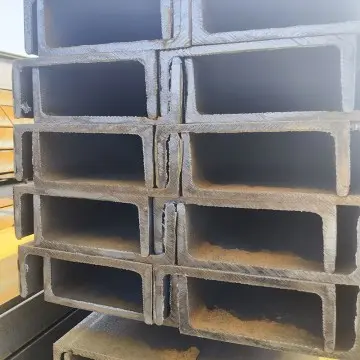
U / C Structural Channel Steel
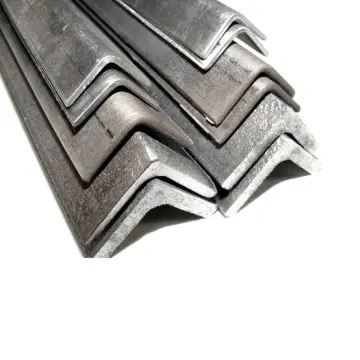
Tower Angle Steel & Brackets
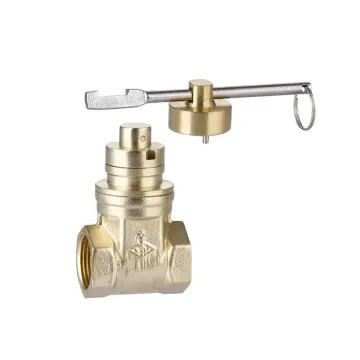
Pressure-Resistant Fluid Valves