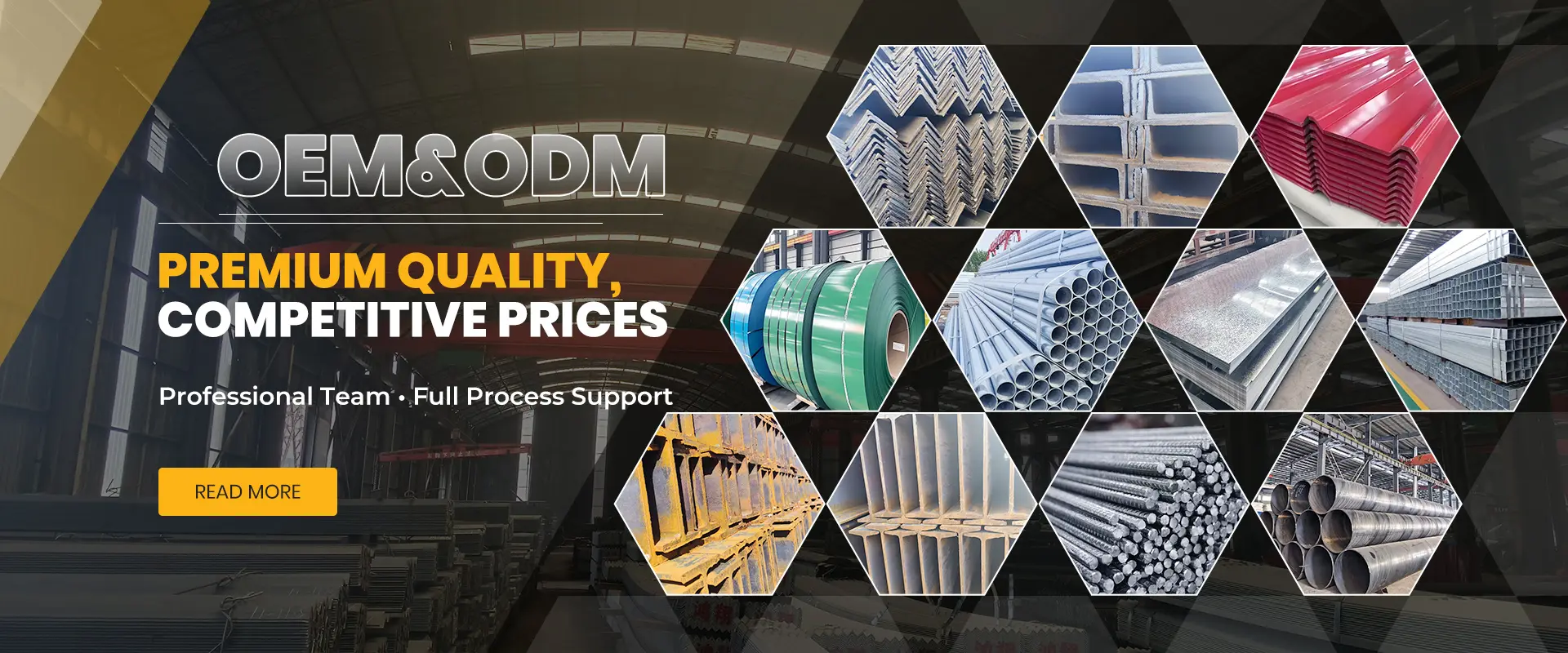
A36 / Q235B Hot-Rolled Heavy H-Beam & Columns
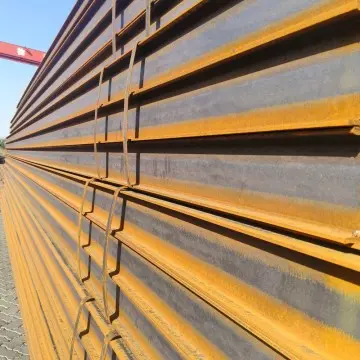
Structural master beams for heavy foundation retaining systems, high-moment king piles, and pier supports.
Engineered for deep excavation, marine revetments, bridge pier cofferdams, and heavy foundation retainment. Factory-direct stock and cut-to-length delivery ready for immediate dispatch.
Structural master beams for heavy foundation retaining systems, high-moment king piles, and pier supports.
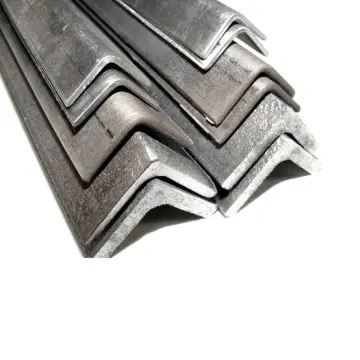
Precision slotted angle bars for bracing sheet pile walers, retaining guide frames, and structural strut assemblies.
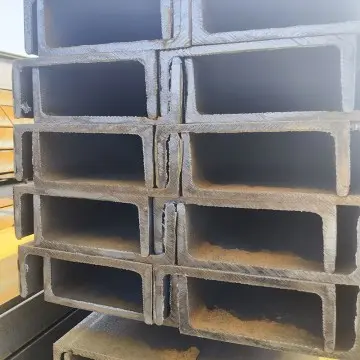
Heavy U/C channels engineered as horizontal capping beams and load distribution walers for tied-back sheet pile walls.
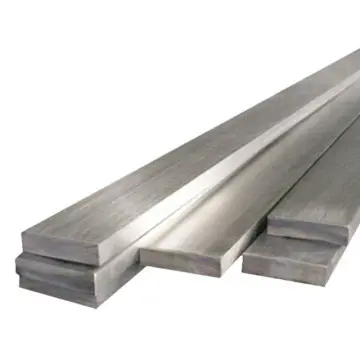
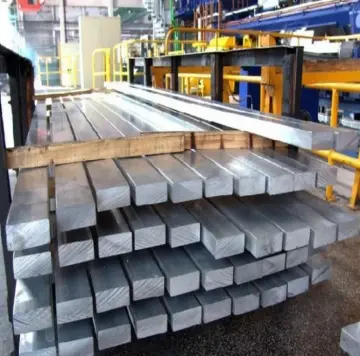
Milled flat bar stock for sheet pile fishplates, clutch capping brackets, earthing bonds, and anchor tie-plate fabrication.
Integrated H-pile, sheet pile combi-wall elements, and I-beam sections pre-matched for high-depth basement retainment.
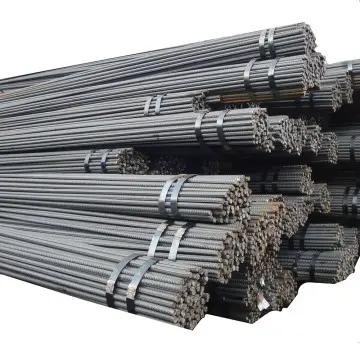
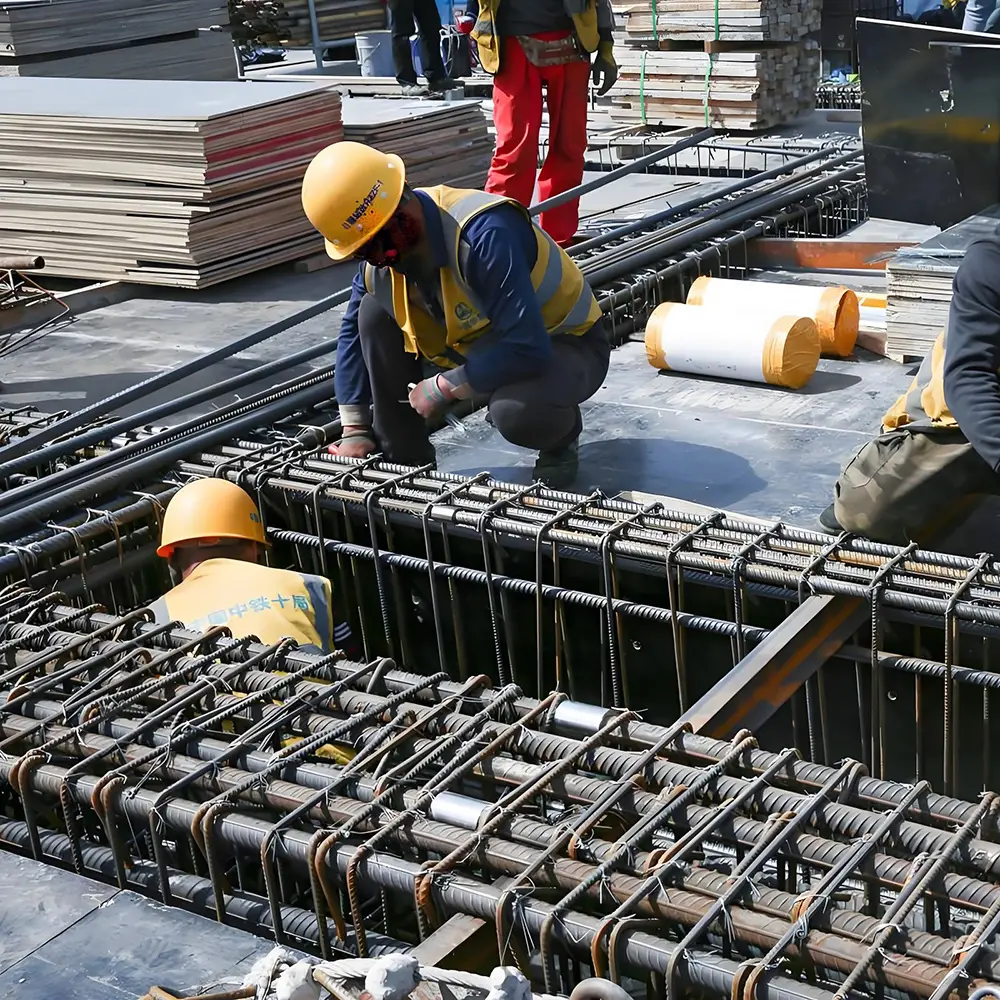
High-tensile deformed rebar for sheet pile capping beams, anchoring deadmen, and foundation reinforced cast-in-place slabs.
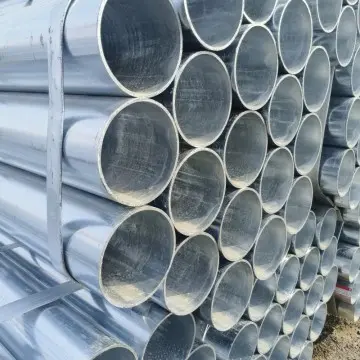
Marine-grade zinc-protected structural flats for sacrificial wear plates, ground anchor links, and tidal zone brackets.
Tubular piles and diagonal struts for combi-wall applications, deep cofferdam bracing, and heavy marine mooring dolphins.
A comprehensive examination of global demand vectors, urban densification requirements, coastal defense fortification, and the raw economic leverage of buying direct from primary integrated Chinese mills.
Worldwide capital expenditure into deep-water maritime ports, urban underground mass transit lines (subways, cut-and-cover road tunnels), and massive climate-resilience flood prevention levees has placed unprecedented demand on high section-modulus steel sheet piling. Geotechnical engineers specify sheet piles over conventional bored concrete secant piles due to their instant structural capacity, 100% watertight interlock sealing capability with modern hydro-swellable polymers, and the ability to eliminate excavation curing wait times.
Unlike monolithic concrete retaining structures that must be demolished and crushed at project termination, structural steel sheet piles exhibit outstanding circularity. In temporary cofferdams, micro-tunnelling shafts, and pipeline trenches, hot-rolled Larssen-type and Z-type profiles are extracted with high-frequency hydraulic resonance hammers, inspected, re-straightened, and driven up to 5 to 10 sequential operational cycles. This multi-phase salvageability radically amortizes initial procurement costs and slashes project Scope 3 embedded carbon emissions.
Navigating the global steel market requires circumventing intermediary trading desks and regional stocking markups that frequently add 20% to 35% in unnecessary freight handling and financing margins. By sourcing sheet piles directly from the Daqiuzhuang/Tangshan industrial clusters via Tianjin Huizhong Xinyu (HZXY), EPC buyers secure direct mill prices, batch chemical test certifications, and consolidated bill of materials (BOM) shipments containing walers, tie rods, rebar, and drainage pipe in single breakbulk or container shipments.
Operating across 1,500 acres with an integrated 10-million-ton annual capacity, Tianjin Huizhong Xinyu integrates direct continuous electric arc furnace (EAF) and basic oxygen furnace (BOF) metallurgy with dedicated structural profile rolling lines. Geotechnical contractors across Southeast Asia, the Middle East, East Africa, and Latin America capitalize on our unique ability to synthesize high-strength European standard steels (EN 10248 S355GP), American structural grades (ASTM A572 Grade 50), and Japanese civil profiles (JIS A 5528 SY295/SY390) with certified Charpy V-Notch impact testing down to -20°C.
Understanding the mechanical divergence between Larssen hot-rolled interlocks and cold-formed continuous Z-profiles is paramount to balancing elastic section modulus, clutch driving friction, and soil impermeability.
| Profile System | Common International Equivalents | Section Modulus (Wz / cm³/m) | Interlock Mechanism | Optimum Soil & Driving Conditions | Primary Commercial Use Cases |
|---|---|---|---|---|---|
| Hot-Rolled U-Type (Larssen) | Larssen II, III, IV, VL, 600 series |
600 to 3,200 cm³/m | Tight Ball-and-Socket (Larssen Clutch) | Gravel, hard clay, cobbles, high-obstruction soils | Temporary cofferdams, urban shafts, multi-reuse leasing |
| Hot-Rolled Z-Type | AZ18, AZ26, AZ36, AZ46, Hoesch |
1,200 to 5,000+ cm³/m | Larssen interlocks at outer flanges | Deep marine berths, high earth & hydrostatic lateral pressures | Permanent port quays, deep bulkheads, storm barriers |
| Cold-Formed Z-Sections | OZ, MMZ, Cold-Bent Profiles |
800 to 4,600 cm³/m | Hook-and-Grip or Roll-Formed Jaw | Medium sands, soft alluvial clays, low-impact driving | River canal embankments, shallow retaining walls, culverts |
| High-Modulus Combined Walls | HZ-M King Piles + Tubular Combi |
5,000 to 45,000+ cm³/m | Welded C9 / E22 connectors to pipe or H-Beam | Extreme dredged water depths (>18m), open-ocean ports | Container terminals, ore unloading wharves, dry docks |
| Straight-Web Flat Piles | AS500, Flat Cellular Piles |
Tensile Interlock Resistance (up to 6,000 kN/m) | High-strength thumb-and-finger joint | Bedrock foundations where pile toe penetration is minimal | Circular cellular cofferdams, breakwaters, artificial islands |

From tidal marine quays to critical subway cut-and-cover shafts, explore how HZXY steel piles and companion structural sections perform across severe operational environments.
Installed as heavy combined retaining walls subjected to extreme tidal fluctuation, dynamic wave slap, and heavy mobile crane surcharge loads. Often paired with H-beam king piles and high-grade tie-back anchors.
Driven into alluvial riverbeds to create dry, watertight dewatered caissons for pouring bridge foundation pile caps. High interlock tolerances prevent water inflow under significant river head pressures.
Acts as zero-slump retaining walls adjacent to existing historic structures, highways, and underground utilities. Minimizes lateral ground displacement during high-depth excavation.
Injected with bituminous or expanding hydrophilic sealants (Adeka Ultra Seal) along interlocks to isolate landfill leachate, chemical plumes, or create permanent seepage barriers beneath earthen flood dykes.
Direct cross-referencing between Chinese National Standards (GB), European Standards (EN), American Standards (ASTM), and Japanese Industrial Standards (JIS) to guarantee exact compliance with engineer of record (EoR) specifications.
| Chinese Standard (GB) | European Norm (EN 10025 / 10248) | American Standard (ASTM) | Japanese Standard (JIS) | Min. Yield Strength (ReH) | Min. Tensile Strength (Rm) | Target Geotechnical Component |
|---|---|---|---|---|---|---|
Q235B |
S235JR / S240GP | ASTM A36 | SS400 / SY295 | 235 MPa | 360 - 510 MPa | Standard U-piles, channel walers, light strutting |
Q355B (formerly Q345B) |
S355JR / S355GP | ASTM A572 Grade 50 | SM490 / SY390 | 355 MPa | 470 - 630 MPa | Heavy Z-piles, deep cofferdams, main H-beams |
Q390B / Q420B |
S390GP / S430GP | ASTM A572 Grade 60 | High Tensile Custom | 390 - 420 MPa | 520 - 680 MPa | Extreme-depth port bulkheads, tie-rod anchors |
Q355NH (Weathering) |
S355J2W (EN 10025-5) | ASTM A588 Cor-Ten | SMA490AW | 355 MPa | 490 - 630 MPa | Splash-zone marine sheet piling with no coating |
*Note on Chinese Metallurgical Code Updates: Pursuant to GB/T 1591-2018, the historic Q345 designation has been fully superseded by Q355 to align precisely with European S355 minimum yield benchmarks (355 MPa for nominal thicknesses ≤ 16 mm). Mill Test Certificates (MTCs) issued by HZXY strictly display 3.1 certification per EN 10204.
Save substantial jobsite labor, avoid crane rental downtime, and eliminate third-party logistics overhead with factory-direct pre-fabrication performed directly inside our Tianjin and Tangshan shops.
Standard flat walls must navigate 90-degree corners, curved river embankments, and tee-junctions. We weld certified Larssen Omega or C9/Delta corner connectors (such as C9, C14, Omega 18, Delta 13) directly onto hot-rolled piles using submerged arc welding (SAW) with full non-destructive ultrasonic flaw examination.
Every sheet pile driven with an excavator-mounted vibratory hammer or crane vibrator requires an engineered lifting hole at the driving head. We CNC drill or plasma-cut reinforced lifting holes precisely centered along the neutral axis, preventing tear-out during high-acceleration driving and extraction.
For splash zone marine installations, sheet piles must withstand chloride ingress, sand abrasion, and galvanic reactions. Our automated blasting facilities prepare surfaces to Sa 2.5 profile standards, followed by multi-coat solvent-free epoxy, glass flake epoxy, or heavy hot-dip galvanizing according to ISO 12944 C5M/CX marine specifications.
Comprehensive technical and commercial responses to the most critical inquiries posed by project directors, civil estimators, and EPC procurement leads.
Steel sheet pile quotations from primary mills are universally quoted in USD per Metric Ton (MT) FOB or CIF/CFR based on theoretical or actual scale weight. However, geotechnical retaining walls are designed by surface area (square meters of wall). To calculate your unit wall cost:
Wall Cost/m² = (Profile Mass in kg/m ÷ Profile Effective Width in meters ÷ 1,000) × Price per Metric Ton
For example, a Larssen profile weighing 76.1 kg/m with an effective width of 0.4 meters requires 190.25 kg of steel per square meter of wall face. When requesting a quote from HZXY, providing either total tonnage or driving depth with wall length enables our engineering team to provide both ex-mill weight quotes and projected coverage metrics.
Hot-rolled sheet piles are rolled directly from molten steel blooms at temperatures exceeding 1,200°C. This creates an integral, tight ball-and-socket (Larssen) clutch with thick steel walls at the interlock knuckles, ensuring exceptional torsional resistance and allowing driving into dense gravels, boulders, and stiff consolidated soils without declutching. They can be extracted and reused up to 5-10 times.
Cold-formed sheet piles are cold-bent from flat coiled steel strip at ambient temperatures. While offering precise section modulus customization and lower manufacturing costs for thinner profiles (6mm-10mm), their cold-bent hook interlocks exhibit looser tolerances and can deform when driven with heavy vibratory hammers into dense hardpan. Cold-formed sections are ideal for temporary shallow trenching, soft marine silt, or un-reused permanent cutoff walls.
Yes. Driving sheet piles as single elements doubles the crane cycle count and increases the risk of rotational wall drift. At our Tianjin and Tangshan processing yards, we routinely supply sheet piles paired in pairs (two interlocked profiles). We offer either interlock crimping (hydraulic press punching at regular 2-meter intervals along the clutch) or stitch welding of the common interlock. This increases section stiffness during driving and reduces on-site driving time by nearly 45%.
For environmental cutoff walls, river cofferdams, and deep basement retainment, mechanical steel interlocks alone allow minor seepage. HZXY provides factory-applied interlock sealants:
Lengths up to 11.8 meters are easily containerized inside 40ft High Cube (40HC) containers, provided piece weights do not exceed container payload limits. For heavy infrastructure piles requiring lengths of 14m, 18m, 24m, or custom 30m lengths, shipments are booked via Breakbulk (BB) or dedicated vessel chartering loading directly through Tianjin Port (Xingang), one of the world's largest breakbulk steel logistics terminals.
Piles are bundled with heavy steel wire strapping, separated with hardwood dunnage, marked with color-coded project identification tags, and protected with maritime rust inhibitors for trans-oceanic voyages.
Yes, this is HZXY's signature procurement advantage. Rather than sourcing sheet piles from one mill, waler channels from a separate distributor, rebar from a local trader, and pipeline packages from another vendor, HZXY consolidates the entire civil engineering Bill of Materials (BOM) under one contract and one Letter of Credit (L/C). Our 1,500-acre logistics staging yards consolidate sheet piles, H-beams, angle braces, tie rods, foundation rebar, drainage pipes, and valves into synchronized shipments.
Complete your geotechnical bill of materials with certified raw materials, tie rods, dewatering pipes, and infrastructure coatings straight from our Tianjin manufacturing complex.
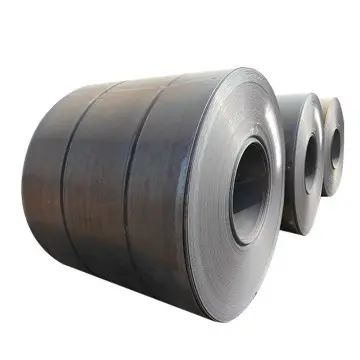
Master mill coils for cold-forming sheet piles, casing tubes, pipe fabrications, and structural brackets.
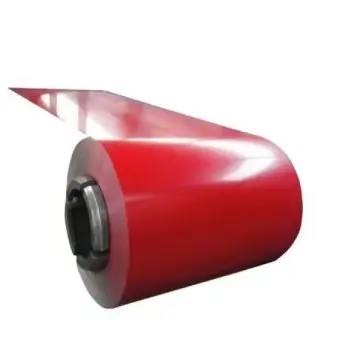
Corrosion-resistant coated coils for structural hoarding, temporary site cladding, and site office panels.
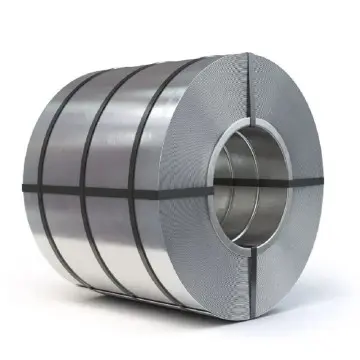
High-formability continuous zinc-coated steel coils for geotechnical accessories, ductwork, and drainage clips.
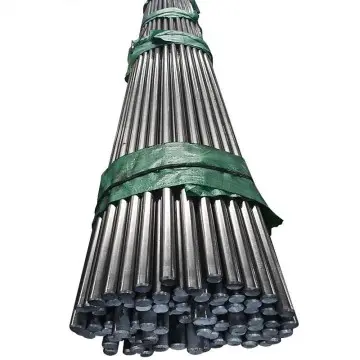
Solid round bar stock for threaded marine tie rods, turnbuckles, waler anchor bolts, and foundation pins.
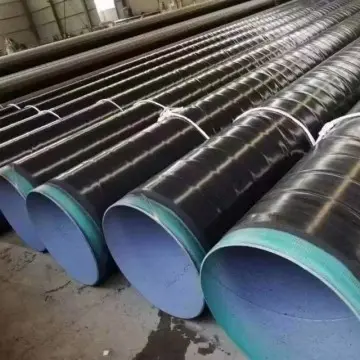
3LPE and epoxy-coated heavy wall steel pipes for deep cofferdam dewatering lines, water injection, and conduit mains.
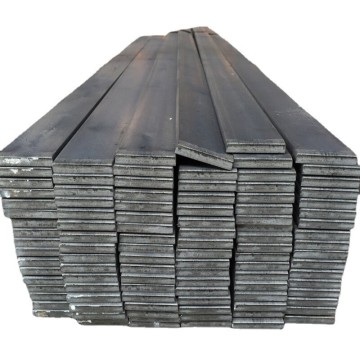
Heavy gauge flat bar for driving shoes, pile point reinforcements, and sacrificial wear strips on sheet pile tips.
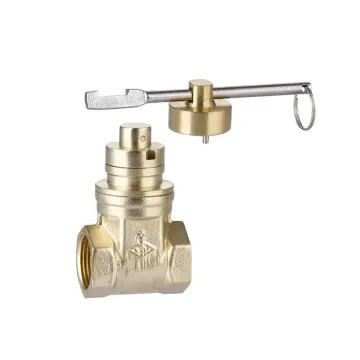
Cast iron and ductile steel valves for deep-well excavation dewatering pumps, manifold systems, and drainage bypass.
Heavy-duty civil drainage and conduit pipes for installation behind sheet pile retaining walls for groundwater relief.
Submit your foundation bill of materials, required section modulus, or excavation drawings. Our engineering desk issues official ex-mill proforma quotations, equivalent grade cross-analyses, and freight estimations within 24 business hours.