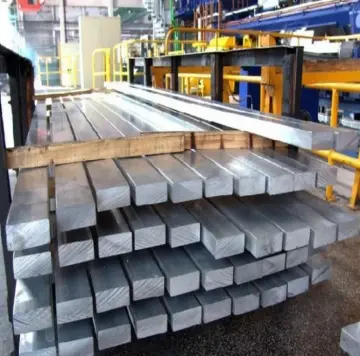
Structural Steel Profiles
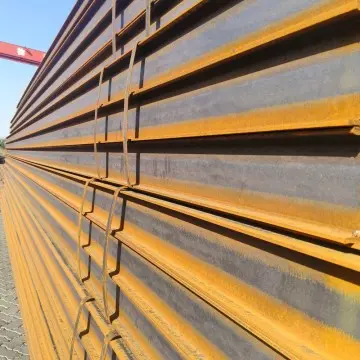
Engineered wide-flange H-beams, I-beams, and channels serving as the backbone for multi-level piping racks and commercial industrial foundations.
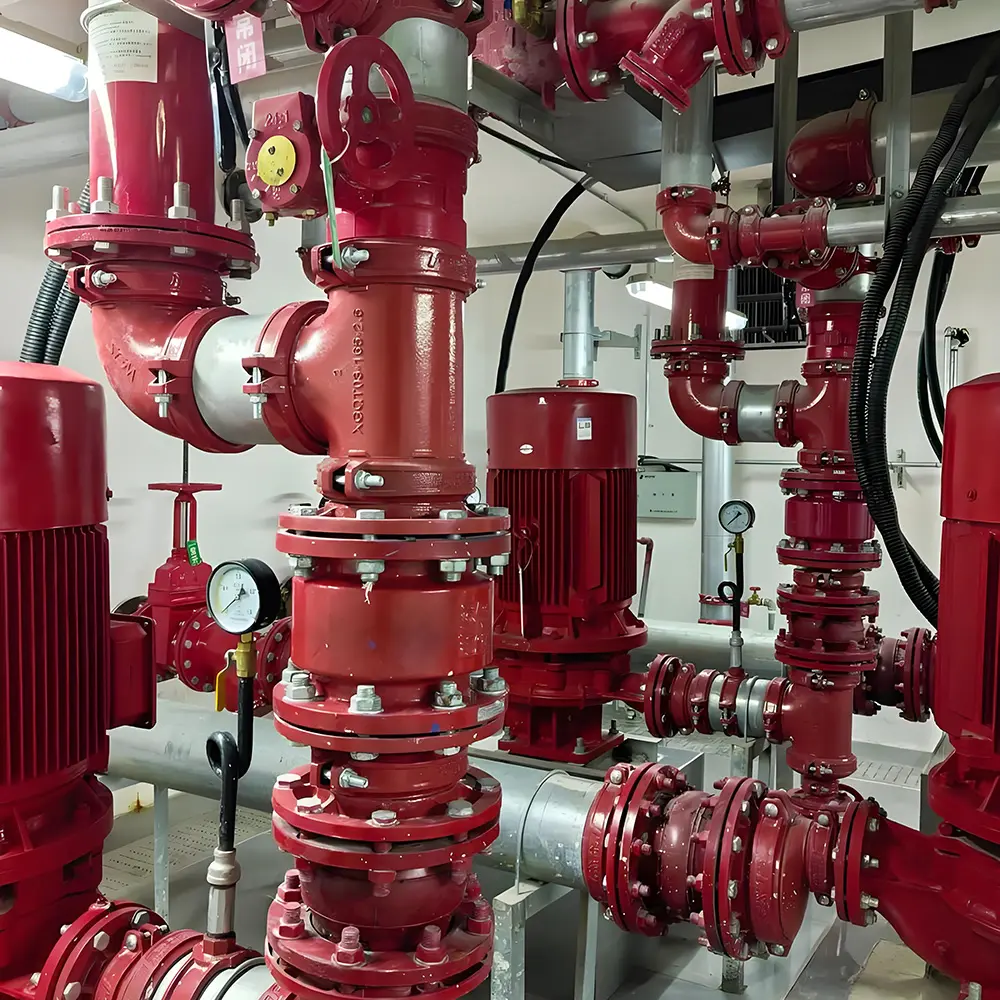
Verified structural steel components and high-integrity fluid conduit systems calibrated for immediate global deployment and EPC site requirements.
Engineered wide-flange H-beams, I-beams, and channels serving as the backbone for multi-level piping racks and commercial industrial foundations.
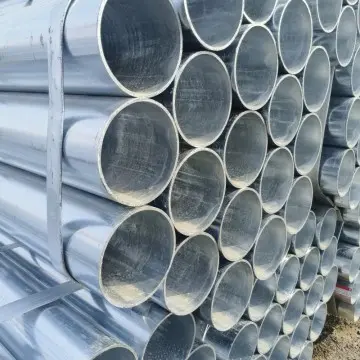
High-tensile zinc-coated circular hollow sections paired alongside plastic distribution networks for fire suppression mains and heavy structural support.
Full-spectrum polymer piping inventory, including cross-linked polyethylene, high-density PVC, and PP-R pressure conduits for complete MEP packages.
Hygienic, zero-scaling thermoplastic lines designed for continuous pressurized potable municipal water delivery and closed-loop hydronic heating circuits.
Chemical-resistant gravity and pressure drainage conduits capable of processing chemical plant waste discharge, gray water, and municipal wastewater.
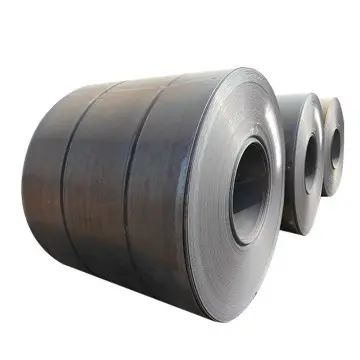
Hot rolled, cold rolled, and prepainted (PPGI) steel coils used for building custom HVAC casing, ductwork framing, and mechanical pipe bracketry.
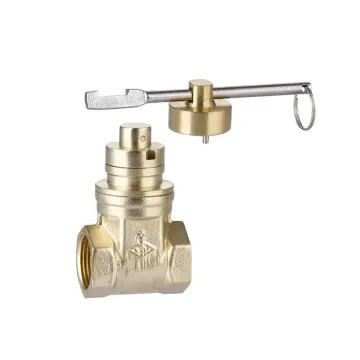
Precision-cast gate, check, and butterfly valves matching the operational thresholds of plastic and steel fluid distribution infrastructure.
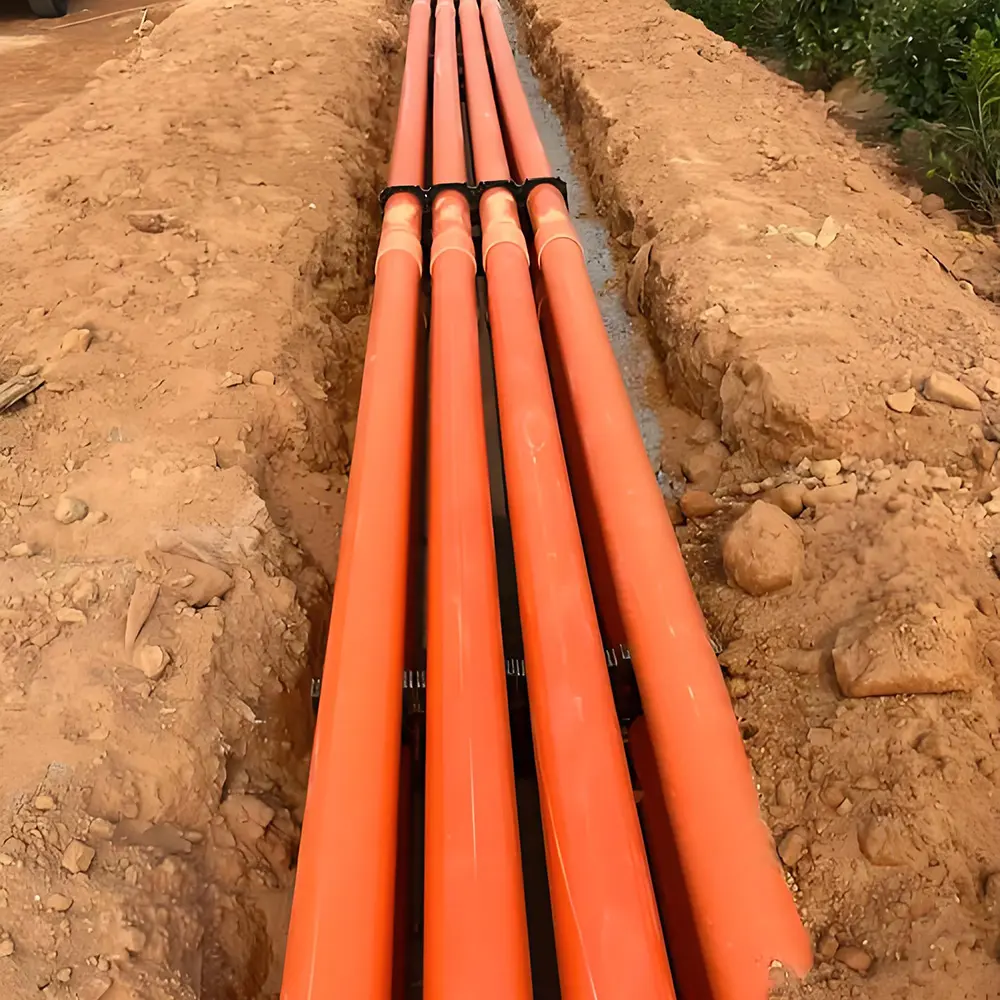
Flame-retardant, high-compression electrical conduit systems safeguarding heavy industrial wiring and MEP communication trunks throughout buildings.
How Polypropylene-Random (Type 3) copolymers fundamentally restructured commercial fluid transport, replacing copper and galvanized pipe through total life-cycle economics.
PP-R (Polypropylene Random Copolymer) integrates short ethylene chains randomly distributed into the polypropylene macromolecular matrix. This unique molecular architecture yields superior mechanical elasticity at elevated temperatures (up to 95°C continuous operation) alongside immense environmental stress crack resistance (ESCR), preventing brittle ruptures common in basic polymers.
Conventional metal plumbing suffers from aggressive electrolytic micro-pitting and heavy scale accumulation that throttles flow volume over time. PP-R maintains an ultra-low Hazen-Williams friction coefficient (C=150) across a 50+ year service window, nullifying internal calcification, minimizing head loss, and reducing HVAC circulating pumping power demands by up to 18%.
Unlike threaded steel systems or glued PVC joints dependent on adhesives prone to degradation, PP-R pipes are joined via thermal socket fusion or butt welding. The pipe and fitting polymerize into a continuous, seamless homogeneous piece, eliminating mechanical leak vectors and guaranteeing zero hydraulic leakage under severe dynamic water hammer pressures.
Leveraging high-density manufacturing clusters in Tianjin and Tangshan to unlock uncompromised material quality at direct-factory economies of scale.
Concentration of petrochemical polymer producers and major steel processing facilities within a 30km radius eliminates domestic inland freight overheads, driving base resin acquisition costs down by 12–15% compared to isolated manufacturers.
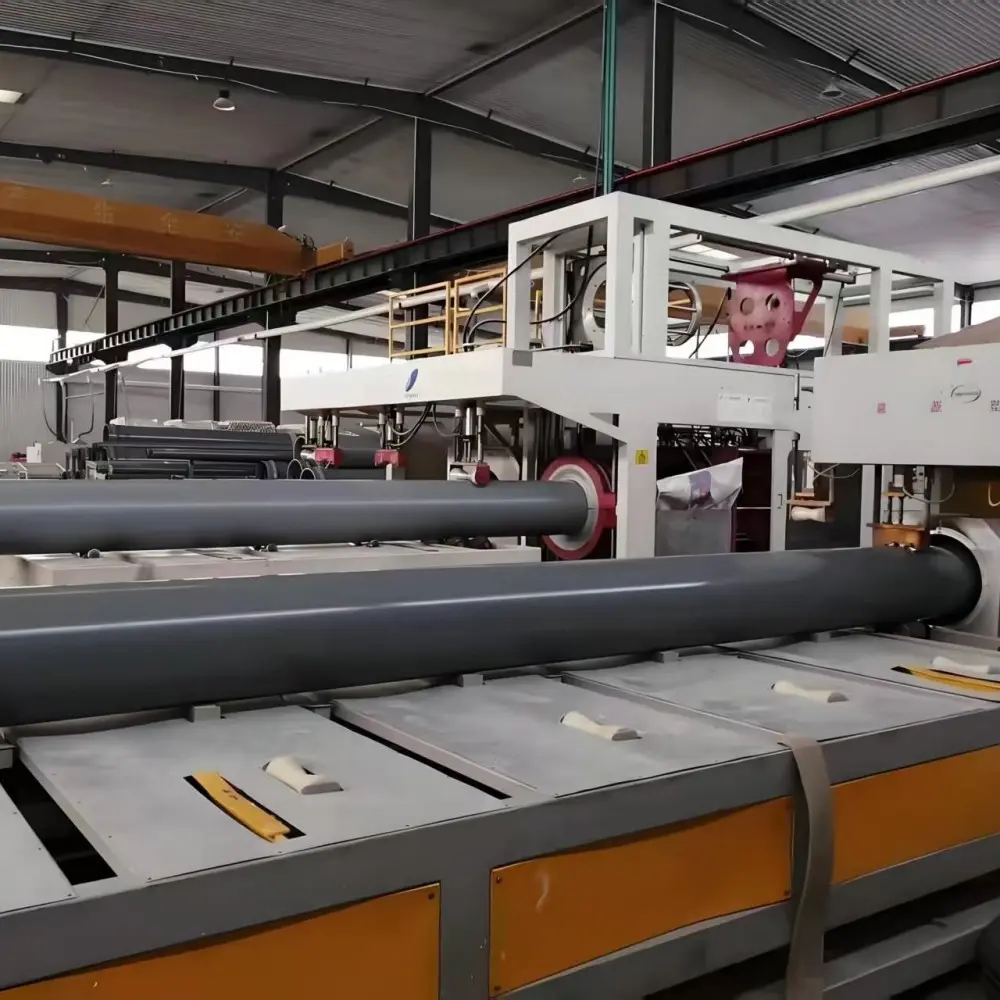
Operating across vast, highly automated extrusion lines running continuously on multi-cavity tooling systems. Massive throughput allows low unit margins without sacrificing resin purity or stabilization additives.
Factory-to-quay line haul distances of under 75 minutes to Tianjin Port drastically reduce ocean pre-carriage freight, demurrage exposure, and export handling turnaround times for multi-container bulk projects.
Cost optimization is achieved through thermodynamic extrusion efficiencies rather than additive dilution. Materials undergo 1,000-hour hydrostatic burst testing in line with ISO 9080 requirements prior to batch export.
Established Foundation
Acres Production Base
Tons Capacity / Year
Export Partner Nations
From Olympic sports complexes to complex chemical conduits, examine how engineered pressure piping is integrated into modern infrastructure.
PP-R PN20 and PN25 lines serve as the hygienic standard in modern high-density residential towers. Non-toxic chemistry complies with strict health standards, while low thermal conductivity (0.24 W/mK) significantly lowers heat dissipation in recirculating domestic hot water loops.
Multi-layer fiber-reinforced PP-R/FR composite pipes reduce linear thermal expansion by 75%, making them ideal for heavy chilled water distribution in high-ambient environments like the Middle East and Southeast Asia without requiring frequent expansion loops.
Industrial pickling plants, electroplating lines, and agricultural chemical operations use heavy-wall SDR6 PP-R systems to handle constant exposure to acid salts, strong bases, and hot processing wastewater that quickly corrodes metallic piping.
Comprehensive engineering dimensional matrix assisting global MEP design coordinators in matching local project pressure tiers with ISO and DIN standards.
| Nominal Outer Dia (OD) | SDR 11 (PN10) - Cold Water | SDR 7.4 (PN16) - Warm Fluid | SDR 6 (PN20) - High Pressure | SDR 5 (PN25) - High Temp HVAC | Standard Length |
|---|---|---|---|---|---|
| 20 mm (1/2") | Wall 2.0 mm | Wall 2.8 mm | Wall 3.4 mm | Wall 4.1 mm | 4.0 m / 5.8 m |
| 25 mm (3/4") | Wall 2.3 mm | Wall 3.5 mm | Wall 4.2 mm | Wall 5.1 mm | 4.0 m / 5.8 m |
| 32 mm (1") | Wall 2.9 mm | Wall 4.4 mm | Wall 5.4 mm | Wall 6.5 mm | 4.0 m / 5.8 m |
| 40 mm (1-1/4") | Wall 3.7 mm | Wall 5.5 mm | Wall 6.7 mm | Wall 8.1 mm | 4.0 m / 5.8 m |
| 50 mm (1-1/2") | Wall 4.6 mm | Wall 6.9 mm | Wall 8.3 mm | Wall 10.1 mm | 4.0 m / 5.8 m |
| 63 mm (2") | Wall 5.8 mm | Wall 8.6 mm | Wall 10.5 mm | Wall 12.7 mm | 4.0 m / 5.8 m |
| 110 mm (4") | Wall 10.0 mm | Wall 15.1 mm | Wall 18.3 mm | Wall 22.1 mm | 4.0 m / 5.8 m |
| 160 mm (6") | Wall 14.6 mm | Wall 21.9 mm | Wall 26.6 mm | Wall 32.1 mm | 4.0 m / 5.8 m |
*Sizing aligned with ISO 15874-2 / DIN 8077-8078. Customized wall thicknesses and fiberglass-composite barrier layers manufactured to order.
Strategic technological evolutions driving commercial adoption and redefining the competitive landscape for international contractors.
Modern plants are adopting multi-layer co-extrusion technology. By sandwiching a high-modulus glass-fiber composite core between virgin PP-R layers, thermal expansion rates drop closer to that of copper, enabling clean, visible vertical riser installations without excessive sagging or costly support anchors.
International contractors are increasingly moving away from manual field assembly toward factory-welded pipe manifolds. Precise spool drawing fabrication reduces field welding times by 60%, guarantees clean weld joints, and lowers overall MEP labor costs on-site.
Life Cycle Assessments (LCA) demonstrate that PP-R uses significantly less embodied energy during manufacturing and transport than heavy copper or ductile iron. Fully recyclable at end-of-life, these systems help projects earn high green building ratings (LEED, BREEAM).
Strategic framework implemented by seasoned procurement teams to mitigate cross-border supply chain risks when sourcing industrial piping.
Insist on verifiable documentation confirming the use of 100% virgin PP-R raw materials (such as Borealis RA130E, Sabic, or Sinopec) and prohibit the inclusion of post-industrial regrind, which severely degrades long-term burst strength.
For transition fittings, verify that all threaded brass components are manufactured using DZR (Dezincification Resistant) CW602N brass alloys to prevent stress fractures under aggressive, mineral-heavy water conditions.
Require factory test reports validating 20°C / 1-hour burst safety checks alongside 95°C / 1,000-hour sustained hydrostatic creep test data in compliance with ISO 15874 parameters.
Optimize shipping container space by nesting smaller pipe diameters inside larger structural lines (e.g., placing 20mm and 25mm pipes within 110mm conduits), significantly reducing international freight costs per meter.
Clear, direct technical answers addressing cost, lifespan, installation, and procurement questions for international engineering teams.
The cost savings from Chinese manufacturers stem from cluster-based raw material access, integrated supply chains, automated high-throughput extrusion lines, and streamlined logistics through Tianjin Port, rather than compromised resin quality. Compliant Chinese producers utilize identical high-grade virgin copolymers (e.g., Borealis, Sinopec) while operating at lower overhead and unit margins.
PP-R possesses intrinsic polymer elasticity that allows the pipe to expand slightly if fluid freezes internally, preventing the brittle circumferential fracturing typical of metal conduits. However, for continuous sub-zero installations, standard closed-cell elastomeric insulation is mandatory to avoid structural ice blockages and reduce thermal losses.
Yes. Connections are achieved using engineered threaded transition fittings with factory-molded dezincification-resistant brass inserts (male or female threads) or via PN16/PN25 steel-backed flanged adapter couplings, eliminating the risk of galvanic corrosion.
According to ISO 15874 stress curves, SDR 6 (PN20) PP-R pipes operated at dynamic pressures within 1.0–1.6 MPa and continuous temperatures of 70°C provide a projected service life exceeding 50 years. For cold-water circuits operating at ambient temperatures (20°C), lifespans easily surpass 100 years.
Streamline supplier management by consolidating primary structural sections, reinforcement bars, and plumbing packages into single, secure sea-freight shipments.
Hot-rolled universal columns and beams for large-span industrial buildings, pipe racks, and multi-tier plant structural framing.
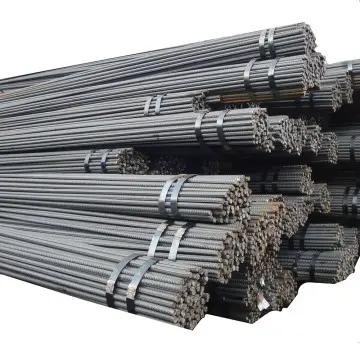
High-yield deformed concrete reinforcement rebar and high-carbon wire rods, securely bundled for reliable structural support in foundation work.
Hot-dip galvanized flat bar systems engineered for plant earthing grids, structural bracing, and custom heavy-duty pipe support clamps.
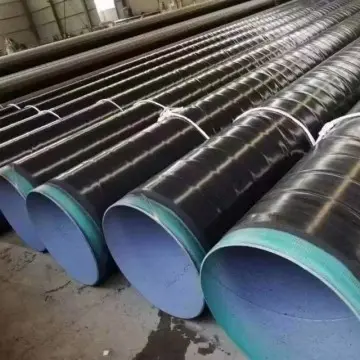
Pressure-certified welded and seamless steel pipeline systems designed for regional natural gas supply networks and plant distribution loops.
Multi-hole high-density conduits designed to protect buried optical fiber lines and municipal data network infrastructure.
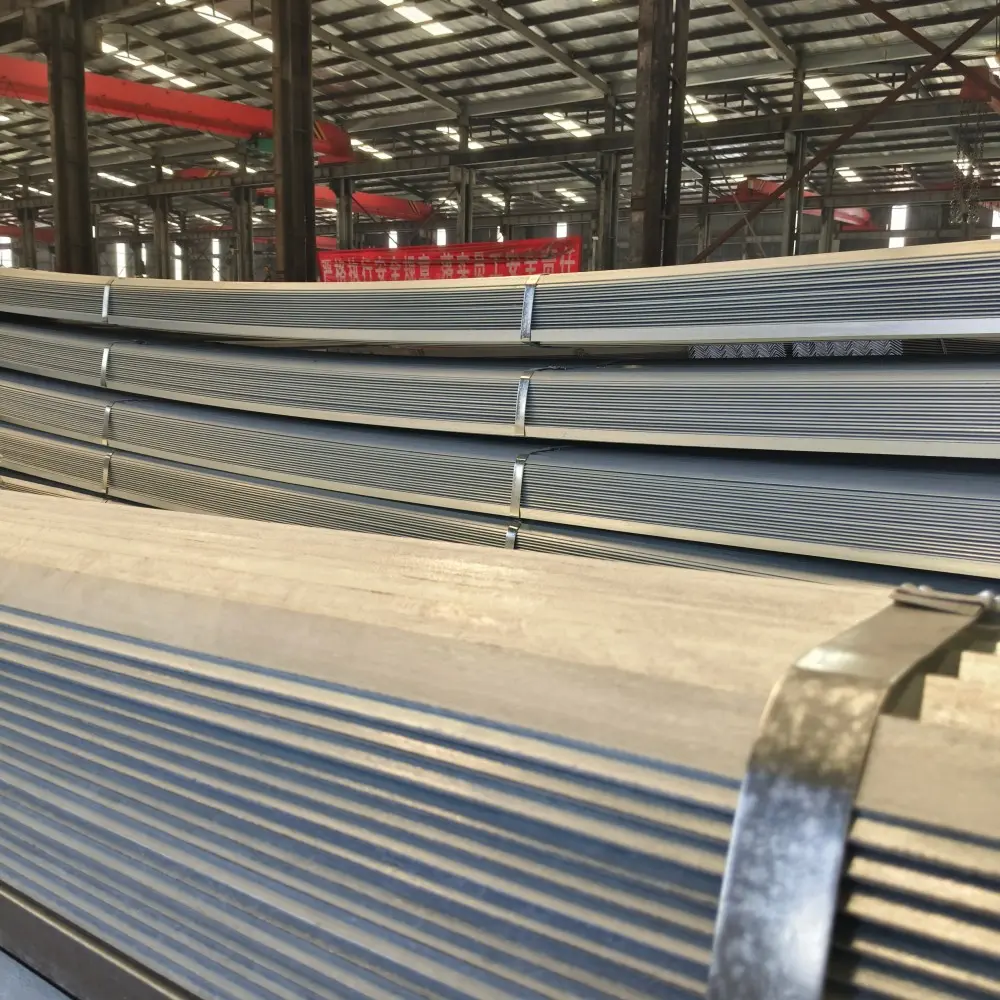
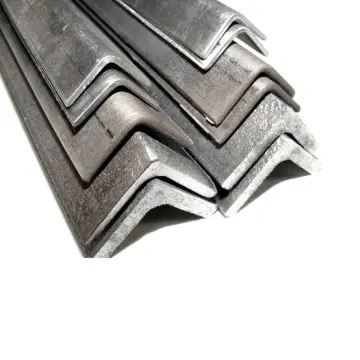
Equal and unequal angle bars for electrical transmission towers, equipment framing, and secondary MEP support brackets.
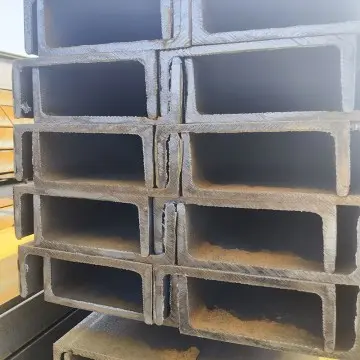
Hot-rolled C and U channel profiles delivering structural stability for machinery foundations, bridge purlins, and wall framing.
High-demand factory inventory maintained year-round to fulfill urgent procurement orders and fast-track shipping schedules without production delays.